Grad School Thesis Writing: Long Session Cognitive Support
TL;DR: Brew 24-32 oz tea for 6-8 hour thesis writing marathons. Sustained hydration supports cognitive endurance. Break ritual prevents burnout during dissertation phase.
Thesis Writing Reality
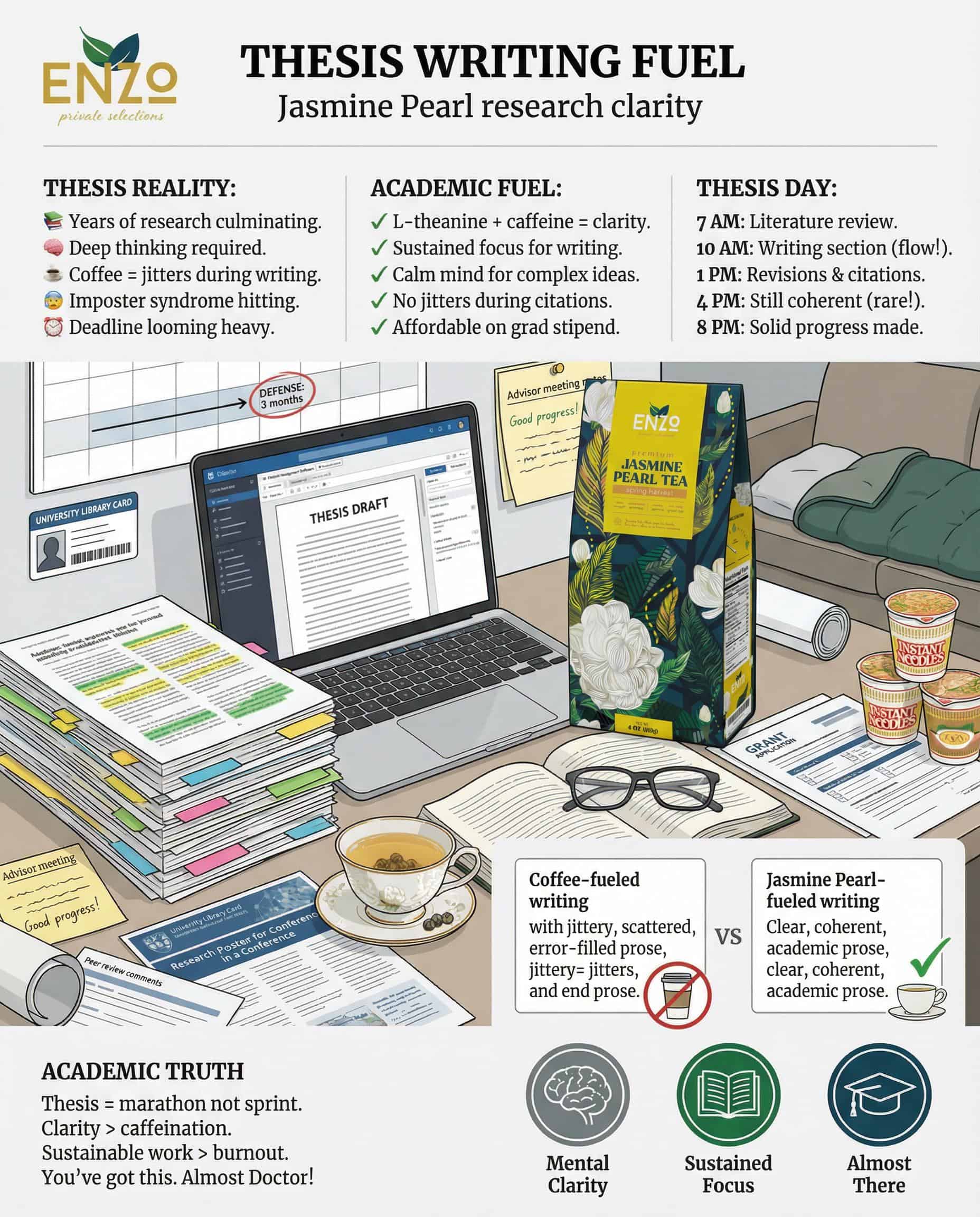
Dissertation or thesis writing demands sustained focus. Six to eight hour sessions required regularly. Your advisor expects consistent progress. Mental stamina becomes limiting factor.
Coffee causes jitters during long sessions. Energy drinks crash hard. You need sustainable cognitive fuel. Green tea provides steady support without downsides.
Jasmine Pearl offers gentle caffeine boost. L-theanine promotes focus without anxiety. The combination supports marathon writing sessions better than coffee alone.
Marathon Session Structure
Start writing at 9 AM. Plan for 8-hour day with breaks. Unrealistic to write straight through. Structure prevents burnout while maintaining productivity.
Hour 1-2: Fresh focus. Tackle hardest section first. Write 1,000-1,500 words. Drink first 8 oz tea slowly.
Hour 2-2.5: Break. Walk outside. Stretch. Refill tea. Check phone briefly. Return refreshed.
Hour 2.5-4.5: Deep work block. Literature integration or analysis. Drink 8 oz tea during this period.
Hour 4.5-5: Lunch break. Real food. Leave desk completely. Walk around campus or neighborhood.
Hour 5-7: Afternoon session. Editing morning work or continued writing. Final 8 oz tea consumed.
Hour 7-8: Light tasks. References. Formatting. Planning tomorrow’s focus. Wind down work intensity.
The structure prevents afternoon crash while maintaining progress toward completion.
For more focus strategies, see our study session guide.
Managing Advisor Meetings
Advisors require regular progress updates. Meetings induce anxiety. You fear disappointing them. Preparation reduces stress significantly.
Drink tea before advisor meetings. Fifteen minutes sitting calmly. Review notes. Breathe deeply. Arrive centered instead of frazzled.
Keep meeting notes concise. Action items only. File immediately after meeting. Tea ritual bookends meeting, containing stress to limited timeframe.
Procrastination Patterns
Thesis writing triggers procrastination. Overwhelming scope. Perfectionism paralysis. Fear of inadequacy. All lead to avoidance behaviors.
Tea ritual breaks procrastination cycle. Commit to drinking tea and writing 30 minutes. Often momentum carries beyond initial commitment. Getting started hardest part.
Set environment triggers. Brew tea equals writing time. Your brain learns association. Eventually tea aroma triggers focus automatically.
Late Night Writing
Some students write better at night. Fewer distractions. Campus quieter. Mental state differs from daytime. Late writing sessions require different approach.
Switch to low-caffeine or herbal tea after 6 PM. Caffeine interferes with post-writing sleep. Hydration still important without stimulation keeping you awake.
Establish hard stop time. 11 PM or midnight maximum. Sleep deprivation ruins next day productivity. Consistent sleep schedule matters more than occasional late nights.
Peer Writing Groups
Some programs encourage writing groups. Shared space and accountability. Others write better alone. Know your work style honestly.
If joining group, bring your tea. Self-contained hydration. No coffee shop trips. Minimize distractions. Group accountability without dependency.
Schedule group sessions strategically. Weekly or biweekly. Daily groups create obligation fatigue. Balance support with independence.
For more productivity tips, see our work focus guide.
Dealing With Setbacks
Chapters get rejected. Methods prove flawed. Literature review needs expansion. Setbacks happen to everyone. Recovery matters more than avoiding problems.
Tea ritual provides consistency during chaos. Advisor criticism stings. Rejected work disappoints. Your morning tea stays constant. The stability anchors emotional regulation.
Take day off after major setbacks. Process feelings. Vent to trusted friend. Return next day with fresh perspective. Marathon requires pacing, including emotional pacing.
Physical Health Maintenance
Dissertation phase destroys physical health. Sitting for hours. Irregular meals. Stress eating. Exercise disappears. Prevention easier than recovery.
Stand and stretch every hour. Timer on phone. Walk around building. The movement prevents stiffness and maintains circulation during long sessions.
Tea supports hydration goals. Eight ounces three times daily minimum. Dehydration impairs cognition measurably. Simple intervention with significant impact.
Financial Stress Management
Teaching assistantships barely cover expenses. Dissertation writing limits outside work. Financial anxiety compounds academic pressure. Strategic choices reduce stress.
Tea costs less than coffee shop habit. $30-40 monthly versus $150-200 for daily lattes. Redirect savings toward emergency fund. Financial buffer reduces anxiety.
Work trade-off analysis carefully. Extra teaching hours provide income. Also delay dissertation completion. Calculate true cost of delayed graduation.
Defense Preparation
Final hurdle after writing completion. Oral defense tests knowledge comprehensively. Preparation crucial but stressful. Strategic approach prevents panic.
Brew tea during defense prep sessions. Practice presentations repeatedly. Answer likely questions. Tea ritual calms nerves during practice runs.
Drink tea morning of defense. Skip extra caffeine. You want calm alertness, not jittery anxiety. Trust your preparation. Your committee wants you to succeed.
Frequently Asked Questions
How many hours daily should I write?
Sustainable pace varies individually. Four to six hours focused writing typical. More hours risks diminishing returns. Quality matters more than quantity. Consistency matters more than occasional marathons.
What if I can’t focus for long sessions?
Start with 90-minute blocks. Increase gradually. Some people never reach 8-hour sessions. That’s fine. Work with your natural rhythm rather than against it.
Should I write every day?
Most productive pattern: write 5-6 days weekly. Take 1-2 days completely off. Your brain needs processing time. Breakthroughs often happen during rest days.
How much tea is too much?
Three to four cups daily safe for most people. Monitor your response. Sleep disruption or anxiety signals excess. Adjust amount to your tolerance.
What about writer’s block?
Change what you’re writing. Switch chapters. Work on references. Edit previous sections. Forward progress takes many forms. Perfect writing doesn’t exist in first draft.
Do I need ergonomic desk setup?
Yes. Poor setup causes lasting damage. Invest in decent chair. Monitor at eye level. External keyboard and mouse. Your body endures months of sitting.
How do I handle imposter syndrome?
Nearly universal among grad students. Your advisor accepted you for reasons. Trust their judgment. Therapy helps severe cases. Peer support groups normalize experience.
What if my thesis topic no longer interests me?
Common mid-dissertation. Push through unless truly miserable. Switching topics delays graduation years. Passion returns after completion when pressure lifts.
Should I take antidepressants if offered?
Personal decision with healthcare provider. Dissertation stress triggers mental health issues frequently. Medication helps some people. Therapy essential regardless. No shame in either choice.
How do I know when I’m done?
Your advisor tells you. Most students overwork dissertations. Perfect doesn’t exist. Good enough truly sufficient. Finished better than perfect. Submit when advisor approves.
External Resources
- The Professor Is In: Academic writing
- Phinished: Grad student support
- Chronicle of Higher Education: Grad school advice
Tags: graduate school, thesis writing, dissertation support, academic writing, cognitive endurance
Article Metadata: Title: “Grad School Thesis Writing: Long Session Cognitive Support”. Author: Enzo Tea. Tags: grad, school, thesis, writing:, long. Slug: grad-school-thesis-writing-cognitive-support. Meta Description: Brew 24-32 oz tea for 6-8 hour thesis writing marathons. Sustained hydration supports cognitive endurance. Break ritual prevents burnout during dissertation phase. Purpose: Guide graduate students on maintaining focus and wellness during thesis writing.