Nowruz Persian New Year: Spring Celebration Traditions
TL;DR: Serve tea during Nowruz (March 20) spring celebration. Traditional Persian hospitality honors cultural heritage. Family gathering beverage supports multi-generational connection.
Understanding Nowruz
Nowruz marks Persian New Year and spring equinox. March 20, 2026 brings renewal celebration. Ancient tradition spans over 3,000 years across Persian-speaking regions.
You celebrate rebirth of nature. Winter ends. Spring begins. The timing coincides with astronomical precision. Your ancestors observed celestial movements to determine exact moment.
Over 300 million people worldwide celebrate Nowruz. Iran. Afghanistan. Tajikistan. Kurdistan. Parts of Central Asia. Diaspora communities everywhere. The shared tradition connects cultures.
Tea in Persian Culture
Persian hospitality revolves around tea service. You welcome guests with immediate tea offer. Refusing tea insults host. Multiple refills expected throughout visit.
Black tea brewed strong. Served in small glass cups. Sugar cubes held between teeth while sipping. Traditional method sweetens each sip. The ritual unchanged for generations.
Tea accompanies conversation. Business discussions. Family gatherings. Social visits. Every interaction includes tea. The beverage facilitates connection and communication.
For more cultural celebrations, see our Diwali festival guide.
Haft-Seen Table Preparation
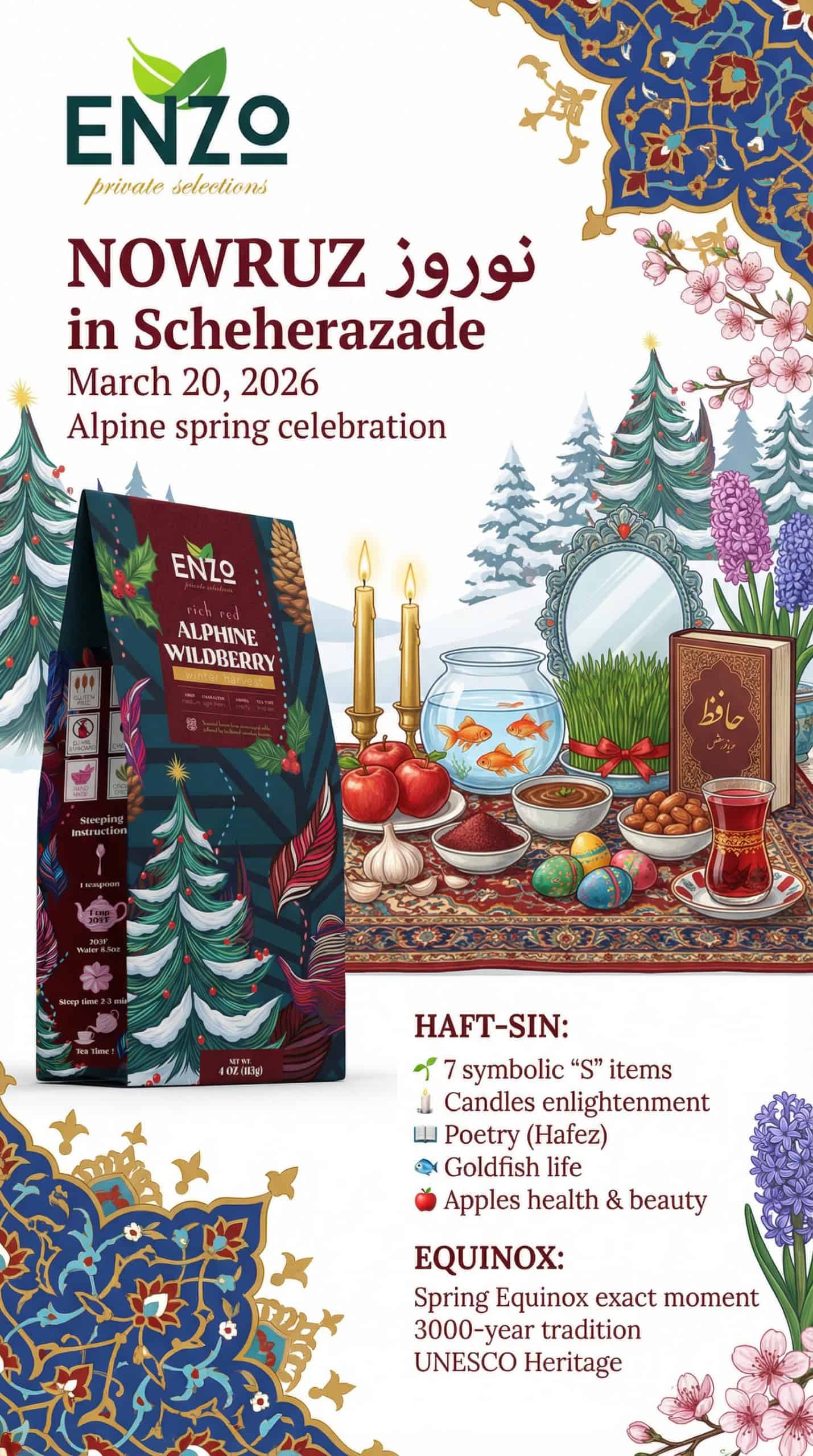
Haft-Seen means “seven S’s.” You arrange seven items starting with Persian letter ‘S’ on special table. Each symbol represents hope for new year.
Seven traditional items:
- Sabzeh (wheat sprouts): Rebirth
- Samanu (sweet pudding): Affluence
- Senjed (dried fruit): Love
- Sir (garlic): Medicine and health
- Sib (apple): Beauty
- Somāq (sumac): Sunrise color
- Serkeh (vinegar): Age and patience
Add mirror, candles, painted eggs, goldfish bowl, hyacinth flowers. Your table becomes beautiful display. Family gathers around for prayers and reflection.
Tea service happens near Haft-Seen table. Guests admire arrangement while drinking tea. Children learn symbolism. Stories pass between generations.
Celebration Timeline
Nowruz celebration extends 13 days. March 20 marks first day. Activities continue through April 1. Each day holds significance.
First day activities: You wake early. Wear new clothes. Exchange gifts. Visit eldest family members first. The order shows respect for age and wisdom.
Mid-celebration: Daily visits to relatives and friends. Each household serves tea and sweets. You reciprocate by visiting their homes. Social bonds strengthen through mutual visits.
Thirteenth day: Sizdah Bedar means “getting rid of thirteen.” You go outdoors. Picnic in nature. The tradition avoids bad luck. Dispose of Sabzeh sprouts in running water.
Modern Nowruz Adaptations
Diaspora communities adapt traditions to new locations. You maintain core elements while adjusting to circumstances. Weekend celebrations replace weekday observance when necessary.
Virtual gatherings connect distant families. Video calls during Haft-Seen viewing. Digital gift exchanges. Technology enables participation despite geographic separation.
Restaurants offer special Nowruz menus. Community centers host public celebrations. Cultural organizations provide education. The tradition evolves while preserving essence.
Tea Service Etiquette
Proper tea service demonstrates cultural knowledge. You prepare fresh pot for guests. Serve immediately upon arrival. Keep refilling throughout visit.
Offer tea with right hand. Accept with right hand. Left hand considered impolite for food and drink. The practice rooted in traditional customs.
Sweet accompaniments essential. Baklava. Cookies. Dried fruits. Nuts. Sugar cubes. The variety shows generosity. Guests expect treats alongside tea.
Never let guest cup empty. Watch closely. Refill before they ask. The attentiveness honors guest. Your hospitality measured by tea service quality.
For more hospitality traditions, see our guest entertainment guide.
Children’s Participation
Children central to Nowruz celebration. You teach them traditions through participation. They help prepare Haft-Seen table. Plant wheat sprouts weeks before.
Special clothes for children. New outfits traditional. They receive gifts from elders. Money in envelopes called “eidi.” The excitement builds anticipation.
Children serve tea to elderly relatives. Demonstrates respect and learning. Adults praise their effort. The encouragement reinforces cultural values.
Stories and songs teach Nowruz meaning. You explain each Haft-Seen item. Read traditional poetry. Share family history. Cultural education happens naturally during celebration.
Food and Feasting
Special dishes prepared for Nowruz. Sabzi polo (herb rice with fish). Ash-e reshteh (noodle soup). Kuku sabzi (herb frittata). Traditional recipes passed down generations.
Preparation begins days before celebration. You cook large quantities for expected guests. Extended family helps. The collective effort strengthens bonds.
Tea accompanies every meal. Breakfast through dinner. Between meals. Evening gatherings. The constant tea service hydrates and comforts.
Sweets abundance during Nowruz. You bake cookies. Prepare pastries. Buy special treats. Sweet symbolizes hope for sweet year ahead.
Spring Cleaning Ritual
Khooneh Tekouni means “shaking the house.” You clean everything before Nowruz. Symbolizes fresh start. Old dust and problems swept away.
Deep cleaning every room. Wash windows. Clean carpets. Organize closets. Paint walls if needed. Your home renewed for new year.
Buy new household items. Dishes. Linens. Decorations. The new items represent fresh beginnings. You display them prominently during celebration.
Clean house ready for guests. Multiple visitors expected. Your preparation shows respect for tradition and guests. The effort demonstrates celebration importance.
Frequently Asked Questions
When exactly does Nowruz start?
March 20, 2026 at precise spring equinox moment. Astronomically determined yearly. Time varies by location. Iran uses Tehran time zone as reference. Your local celebration adjusts accordingly.
Do I need to be Persian to celebrate?
No. Nowruz welcomes everyone. Many cultures celebrate spring renewal. Persian communities often invite others to join. Cultural appreciation differs from appropriation. Respectful participation encouraged.
What tea variety serves best?
Strong black tea traditional. Ceylon or Assam varieties work well. Brew concentrated. Dilute with hot water when serving. Earl Grey acceptable. Green tea less traditional.
How many days should I celebrate?
Full 13 days traditional. Modern life often permits only 3-4 days. First day most important. Last day (Sizdah Bedar) significant. Celebrate what time allows while honoring spirit.
What gifts are appropriate?
Money for children (eidi). Sweets for hosts. Flowers welcomed. Books appreciated. Gold coins traditional. Tea sets excellent choice. Gift wrapping matters. Presentation shows care.
Can I celebrate if working full time?
Yes. Weekend celebration common for diaspora. Friday evening through Sunday. Visit key relatives. Prepare simplified Haft-Seen. The intention matters more than duration.
What if I don’t have all Haft-Seen items?
Adapt with available items. Core seven items priority. Additional items optional. Symbolic meaning matters more than perfection. Creativity acceptable in diaspora settings.
How do I explain Nowruz to non-Persian friends?
Compare to New Year celebration plus spring festival combined. Mention ancient origins. Emphasize renewal and fresh starts. Invite them to participate. Direct experience teaches better than description.
Should I fast before Nowruz?
No fasting required. Some choose personal reflection time. Cleansing diet optional personal choice. Traditional celebration includes abundant food. Focus on joy and renewal.
What about allergies and dietary restrictions?
Accommodate guests respectfully. Offer multiple sweet options. Label ingredients. Tea naturally safe for most. Your thoughtfulness demonstrates hospitality. Modern etiquette balances tradition with inclusivity.
External Resources
- United Nations: Nowruz International Day
- UNESCO: Intangible cultural heritage
- Persian Cultural Foundation: Holiday guide and traditions
Tags: nowruz, persian new year, spring celebration, cultural tradition, march celebration
Article Metadata: Title: “Nowruz Persian New Year: Spring Celebration Traditions”. Author: Enzo Tea. Tags: nowruz, persian, year:, spring, celebration. Slug: nowruz-persian-new-year-spring-celebration-traditions. Meta Description: Serve tea during Nowruz (March 20) spring celebration. Traditional Persian hospitality honors cultural heritage. Family gathering beverage supports multi-generational connection.. Purpose: Guide readers about nowruz persian new year: spring celebration traditions.