Best Beverages for Podcast Recording Sessions
TL;DR: Room temperature fruit tea keeps vocal cords hydrated without causing stomach gurgling or throat clearing. Avoid carbonation, caffeine jitters, and temperature extremes during recording.
Why Podcast Recording Demands Special Beverage Choices
Audio recording picks up every sound your body makes. Stomach gurgling from carbonated drinks ruins takes. Ice cubes clinking in glasses interrupt flow. Throat clearing from wrong beverages wastes recording time.
Your voice needs consistent hydration throughout recording sessions. Most podcasts run 45-90 minutes. Professional voice actors drink specific beverages to maintain vocal clarity. Podcasters benefit from the same strategies.
The wrong beverage creates problems you hear during editing. Coffee triggers excessive saliva production. Cold water tightens vocal cords. Sugary drinks leave sticky residue that affects speech clarity.
Understanding Vocal Cord Hydration Needs
Vocal cords are mucous membranes requiring consistent moisture. When you talk continuously for 60-90 minutes, these membranes dry out. Dry vocal cords produce raspier tones and require more effort to operate.
According to research from the Journal of Voice, dehydration reduces vocal efficiency by 15-20%. Your voice fatigues faster when tissues lack moisture. This explains why your voice sounds different at the end of long recording sessions compared to the beginning.
Room temperature liquids hydrate vocal tissues most effectively. Cold drinks cause temporary vocal cord constriction. Hot drinks can irritate sensitive membranes. The ideal drinking temperature ranges from 65-75°F, basically room temperature.
Why Most Beverages Fail During Recording
Coffee seems appealing for early morning recording sessions. The caffeine provides energy and focus. However, coffee increases saliva production. Excess saliva causes frequent swallowing sounds picked up by microphones.
Water works better than coffee but lacks appeal during long sessions. Plain water fails to motivate adequate hydration. Most people drink less when beverages taste boring.
Carbonated drinks create the worst recording conditions. Carbon dioxide forms bubbles in your stomach. These bubbles release as stomach noises. Your microphone captures every gurgle. Editing out constant stomach sounds wastes hours.
Juice and soda add problems beyond carbonation. The high sugar content creates sticky mouth feel. This stickiness causes lip-smacking sounds. You’ll hear these small noises amplified during playback.
Why Fruit Tea Works for Podcasting
Fruit tea hits the optimal beverage sweet spot for recording. The flavor encourages adequate hydration. The lack of carbonation prevents stomach noise. Zero calories mean no sugar mouth feel.
Room temperature fruit tea maintains vocal cord flexibility. You avoid the vocal strain from cold liquids. The lack of caffeine (in fruit varieties) prevents mid-recording jitters or crashes.
Enzo fruit teas provide specific advantages. The natural fruit flavors satisfy taste preferences without added sugar. Each variety offers different flavor profiles suitable for different recording styles.
Best Enzo Varieties for Recording Sessions
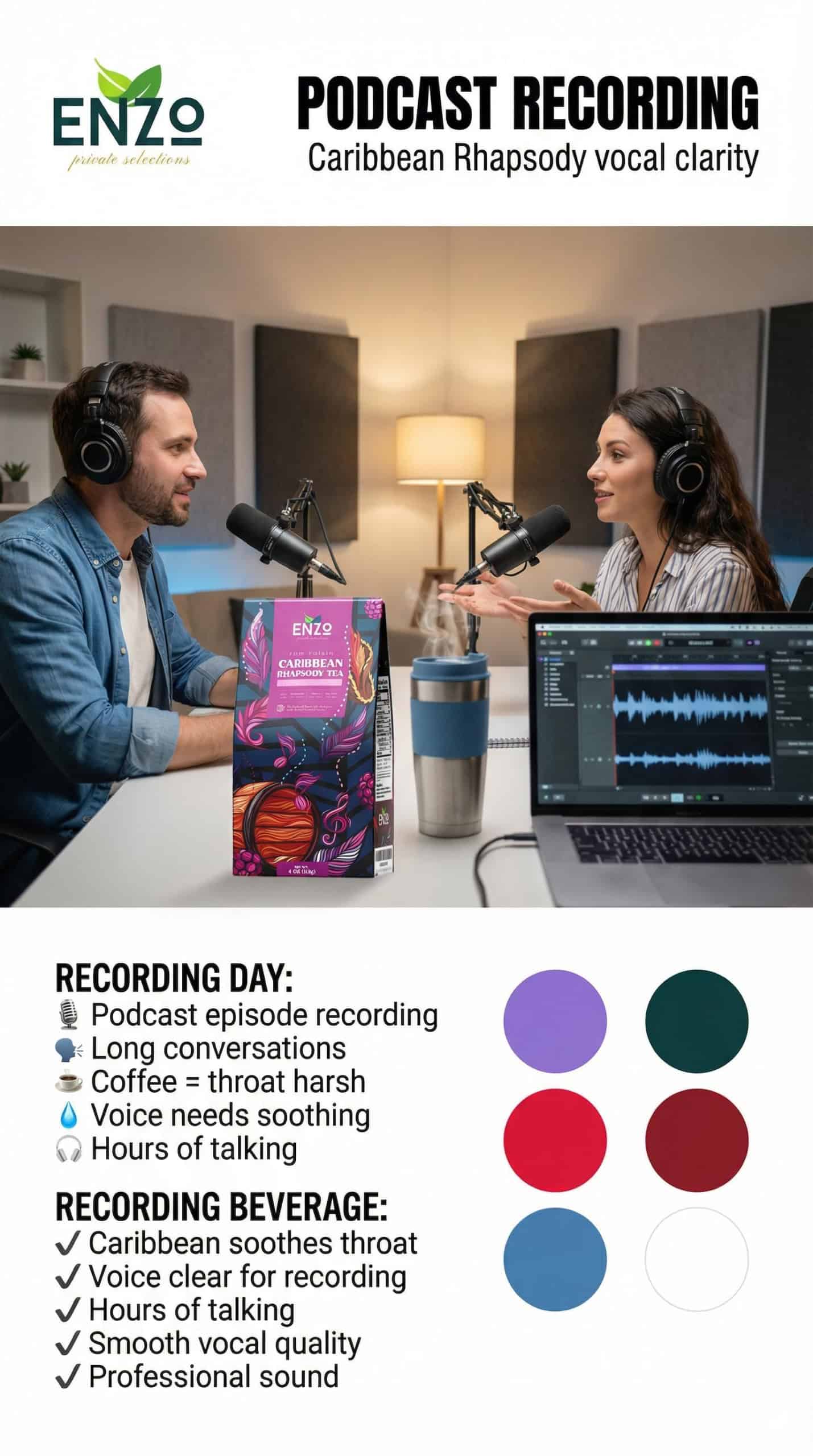
Caribbean Rhapsody works well for interview-style podcasts. The berry flavor refreshes between questions. The natural tartness cleanses your palate without being distracting.
Tropic Tiki suits storytelling and narrative podcasts. The tropical notes match the creative energy needed for engaging storytelling. The flavor stays pleasant through multiple sips.
Jasmine Pearl Green Tea serves analytical or educational podcasts. The light caffeine (20-30mg) provides gentle focus without jitters. The subtle floral taste does not overwhelm. Choose this for morning recordings requiring mental clarity.
Alpine Wildberry fits casual, conversational podcasts. The forest berry blend creates a cozy atmosphere. This variety works well for long-form interview formats lasting 90+ minutes.
Crimson Harvest pairs with true crime or mystery podcasts. The deep berry notes match serious content. The robust flavor sustains you through intense discussion topics.
[Image Insert Prompt #136]
Setting Up Your Recording Beverage Station
Prepare your hydration setup before recording begins. Interrupting sessions to refill drinks breaks your flow and wastes time.
Essential Setup Elements
Brew 24-32 ounces of room temperature tea. This quantity sustains most podcast recordings. Use an insulated, non-condensating tumbler. Condensation drips create handling noise. Insulation maintains consistent temperature.
Choose a cup with a wide, stable base. Narrow tumblers tip easily when you reach for them. Tipping accidents ruin takes and damage equipment. A wider base prevents accidents.
Position your beverage within easy reach but outside your hand gesture range. Many podcasters talk with their hands. Placing drinks where you naturally gesture causes spills. A spot 18-24 inches to your non-dominant side works well.
Cover your beverage between recording segments. Even in climate-controlled studios, dust and particulates settle on open liquids. A simple coaster or napkin placed over the opening keeps your tea clean.
Strategic Drinking During Recording
Professional voice actors drink specific amounts at strategic times. Podcasters should follow similar patterns for optimal performance.
Optimal Hydration Timing
Take 2-3 sips before starting your introduction. This wets your vocal cords and establishes your voice. Your first words after hydrating sound clearer and more resonant.
Drink during natural pauses in content. After asking interview questions, while guests respond. During music or ad breaks. Between segment transitions. These pauses hide the slight mouth sounds from drinking.
Avoid drinking mid-sentence or during rapid dialogue exchanges. The brief mouth wetness affects articulation for 3-5 seconds. This creates subtle sound quality changes that editors notice.
Take larger drinks every 20-25 minutes. Small sips every few minutes keep tissues moist. Larger drinks every half-hour prevent dehydration. This two-tier approach maintains consistent vocal quality.
Managing Energy Without Caffeine Crashes
Many podcasters rely on coffee for recording energy. This creates problems. Coffee’s caffeine peaks at 45 minutes, right when most podcasts end. The subsequent crash affects post-recording work like editing.
Fruit teas provide stable energy through natural hydration. Your brain runs on glucose and water. Dehydration reduces cognitive function by 10-15% according to the European Journal of Clinical Nutrition. Staying hydrated maintains mental clarity without artificial stimulation.
For early morning recordings, Jasmine Pearl Green Tea offers light caffeine (equivalent to 1/4 cup of coffee). This provides gentle focus without jitters or crashes. The L-theanine in green tea promotes calm alertness. Your mind stays sharp without the anxious edge of excessive caffeine.
Temperature Control for Long Recording Sessions
Recording studios vary in temperature. Equipment generates heat. Multiple people in small spaces raise ambient temperature. Your beverage temperature management affects vocal performance.
Start with room temperature tea (65-70°F). This temperature range feels neutral to your throat. As the session progresses and room temperature rises, your tea warms slightly. This gradual warming prevents sudden temperature shocks to your vocal cords.
For afternoon recordings in warm studios, add 1-2 ice cubes to your tea. Not enough to make it cold, just enough to keep it comfortably cool (60-65°F) through the session. Let the ice partially melt before drinking.
Never drink very hot or very cold liquids during recording. Temperature extremes temporarily alter vocal cord function. Your voice sounds different for 5-10 minutes after consuming extreme temperatures. Consistency matters for professional sound quality.
Avoiding Common Podcasting Beverage Mistakes
New podcasters make predictable beverage errors. Learning from others’ mistakes saves you editing headaches.
Mistakes to Avoid
Drinking carbonated anything. Even sparkling water creates stomach sounds. The carbonation releases gradually over 20-30 minutes. Your stomach becomes a percussion instrument.
Using glass containers without coasters. Glass cups sweat. The condensation pools under the glass. When you lift the glass, water drips. These drip sounds are difficult to edit out cleanly.
Filling containers too full. A cup filled to the brim requires careful handling. This caution creates tension. Tense shoulders affect vocal quality. Fill cups 75-80% full for relaxed handling.
Choosing highly aromatic beverages. Strong-smelling drinks like peppermint tea or heavily flavored coffees create sensory distraction. You smell them constantly. This background smell interferes with focus. Subtle fruit tea aromas do not create this problem.
Keeping beverages in recording frame. Visual clutter affects your mental state. Even if the podcast is audio-only, your environment influences performance. Keep beverages nearby but outside your direct line of sight.
For more content creator tips, see our work from home productivity guide and creative work focus strategies.
[Image Insert Prompt #136]
Multi-Hour Recording Session Strategies
Some podcasts run 2-3 hours. Marathon interview sessions require special beverage planning. Your initial 32 oz container will not suffice.
Prepare two separate containers before starting. Use your first container for the first 90 minutes. Keep a second 32 oz container in a nearby mini-fridge or cooler. Swap containers during a planned break around the 90-minute mark.
This two-container system prevents mid-session refilling. Refilling requires leaving the recording space. You break your mental state. The room acoustics change when doors open. A pre-prepared second container eliminates these disruptions.
Marathon sessions also benefit from variety. Start with lightly caffeinated Jasmine Pearl Green Tea. Switch to caffeine-free Caribbean Rhapsody after 90 minutes. The flavor change refreshes your palate and signals a mental shift to the second half of your recording.
Guest Beverage Considerations
When hosting guests, offer them appropriate beverages too. Poor guest hydration affects their audio quality. Their vocal quality reflects on your podcast’s professionalism.
Prepare two varieties of room temperature fruit tea. Offer guests a choice. This accommodation shows professionalism. Most guests appreciate having options beyond plain water.
Brief guests on why you serve specific beverages. Explain that room temperature prevents vocal strain. Mention that fruit tea avoids stomach sounds. This education helps guests understand your attention to quality.
Keep backup plain water available. Some guests have allergies or strong beverage preferences. Forcing your choices creates discomfort. Comfortable guests give better interviews.
Frequently Asked Questions
Why room temperature tea instead of cold or hot?
Room temperature (65-75°F) maintains optimal vocal cord flexibility. Cold liquids temporarily constrict vocal cords, reducing tonal range. Hot liquids can irritate sensitive throat tissues. Professional voice actors use room temperature drinks for consistent performance. Podcasters need the same consistency for quality audio.
How much should I drink during a one-hour podcast?
Aim for 12-16 ounces over one hour. Take small sips (1-2 ounces) every 10-15 minutes. This maintains consistent vocal cord moisture without creating bathroom urgency. Adjust based on your body size, speaking intensity, and studio temperature.
Does carbonated water work if I let it go flat first?
Flat water works fine. The issue is carbonation, not the water itself. However, most sparkling waters contain sodium or minerals that change taste. Plain filtered water or fruit tea still work better. The process of de-carbonating water wastes time compared to just starting with non-carbonated options.
What about honey tea for soothing vocal cords?
Honey creates mouth stickiness that audio microphones pick up. The sugar content causes lip-smacking sounds. For occasional throat soothing between recording sessions, honey works well. During active recording, avoid honey and other sweeteners. Save honey tea for vocal recovery after recording ends.
Which Enzo tea has the least flavor for picky guests?
Jasmine Pearl Green Tea offers the most subtle flavor profile. The light floral notes appeal to people who dislike fruity tastes. For guests who prefer completely neutral options, keep plain filtered water as backup. Most guests appreciate fruit tea options once they try them.
Should I caffeine-load before important recording sessions?
No. Caffeine causes jitters that affect vocal steadiness. Your hands may shake slightly, causing handling noise with notes or equipment. Caffeine also increases heart rate, which microphones can sometimes detect in quiet moments. If you need caffeine, use Jasmine Pearl Green Tea for gentle, steady energy without side effects.
How do I prevent mouth noises from drinking during recording?
Drink during natural pauses: after questions, during music breaks, between segments. Take smaller sips that require less mouth movement. Use a wide-mouth container that does not require pursed lips. Practice drinking quietly before recording. Most mouth noise comes from technique, not the beverage itself.
Does tea choice affect voice tone or pitch?
Beverages do not change your fundamental voice characteristics. However, proper hydration prevents vocal fatigue that makes your voice sound tired or raspy. Well-hydrated vocal cords maintain your natural tone throughout long sessions. Dehydrated cords gradually sound rougher and lower-pitched.
What temperature kills vocal cord performance fastest?
Ice-cold drinks (below 50°F) cause immediate vocal cord constriction. You hear this as temporary loss of upper range or tonal warmth. The effect lasts 5-10 minutes. Very hot drinks (above 120°F) irritate tissues, causing throat clearing and coughing. Both extremes disrupt recording quality.
How long before recording should I start hydrating?
Begin hydrating 30-60 minutes before recording. Your body needs time to absorb fluids and hydrate tissues. Drinking large amounts immediately before recording creates bathroom urgency mid-session. Start hydration early, then maintain with small sips during recording.
External Resources
For more information about voice health and content creation:
- Journal of Voice: Vocal Health for Performers
- National Center for Voice and Speech: Hydration and the Voice
- European Journal of Clinical Nutrition: Hydration and cognitive performance
Your podcast deserves professional audio quality. Beverage choices significantly impact that quality. Room temperature fruit tea provides hydration, flavor, and vocal support. Set up your recording station with the right drinks before your next session.
title: “Best Beverages for Podcast Recording Sessions” author: “Enzo Tea” date: “2026-01-09” tags: [“podcasting”, “content creation”, “voice health”, “recording studio”, “creator tips”] slug: “podcast-recording-tea-drinks” meta_description: “Keep your voice clear and energy steady during podcast recording. Learn which beverages support vocal health and mental clarity without stomach noise.” purpose: “Guide podcasters to optimize hydration for better recording sessions” last-updated: “2026-01-09”