Study Session Tea Guide: Focus Without Jitters
TL;DR: Keep 32 oz of cold tea at your study desk. Sip every 15-20 minutes. Your brain stays hydrated, focus remains steady, and you avoid caffeine crashes.
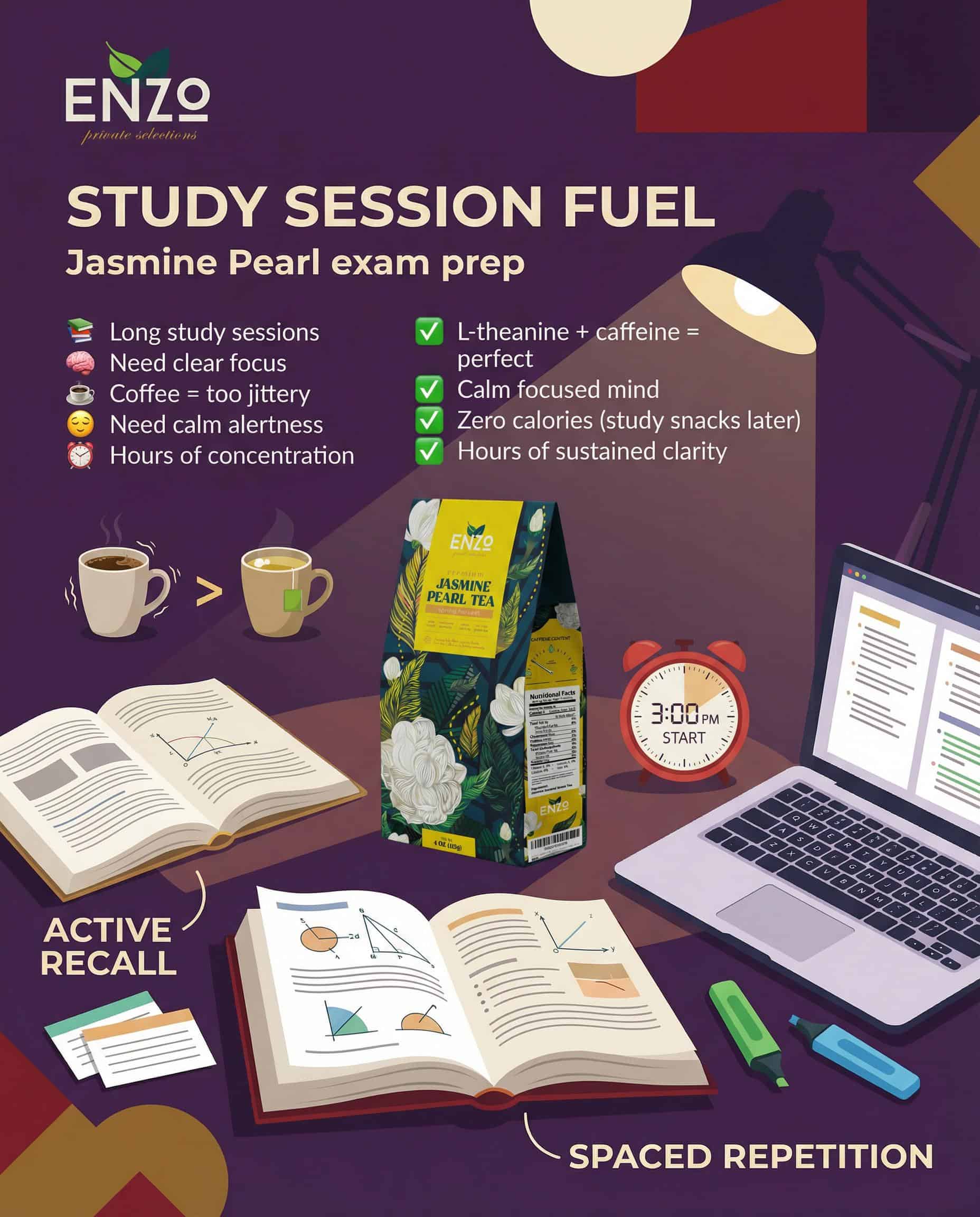
Why Study Sessions Need Beverage Strategy
Most students approach studying without hydration plans. You sit down with textbooks and forget to drink for 2-3 hours. Your concentration weakens gradually. You blame the material’s difficulty when actually you need fluids.
The brain consists of 73% water. Even 2% dehydration reduces cognitive performance by 10-15% according to research from the Journal of the American College of Nutrition. Your study efficiency drops not from lack of intelligence but lack of hydration.
Coffee seems like the obvious study aid. However, coffee creates more problems than it solves. The high caffeine dose (95mg per cup) causes jitters. Your hands shake during note-taking. The crash after 90 minutes ruins your study rhythm. You spend more time managing coffee’s side effects than actually studying.
Understanding the Brain-Hydration Connection
Your brain cells require consistent fluid levels to operate efficiently. Neural connections transmit information through electrochemical signals. These signals depend on proper fluid balance.
When dehydrated, your brain tissue physically contracts. This contraction reduces processing speed and impairs memory formation. The information you study does not encode properly into long-term memory.
A 2018 study in Frontiers in Human Neuroscience found dehydrated students performed 15% worse on memory tests than properly hydrated peers. The dehydrated group also reported 30% higher perceived difficulty. The same material felt harder simply due to fluid deficiency.
Proper hydration throughout study sessions maintains optimal brain function. Information processes faster. Recall improves. Comprehension increases. The material feels more manageable.
Why Tea Beats Coffee for Studying
Coffee delivers rapid caffeine spikes. You feel energized for 45-60 minutes. Then the crash arrives. You feel worse than before drinking coffee. This rollercoaster disrupts consistent focus needed for effective studying.
Tea provides gentler, sustained energy. Jasmine Pearl Green Tea contains 20-30mg caffeine versus coffee’s 95mg. The lower dose prevents jitters while maintaining alertness. The gradual release sustains focus for 2-3 hours.
Green tea also contains L-theanine, an amino acid promoting calm concentration. L-theanine works synergistically with caffeine to create “calm alertness.” You think clearly without anxiety. This state proves ideal for complex academic work.
Fruit teas (Tropic Tiki, Caribbean Rhapsody, Alpine Wildberry, Crimson Harvest) contain zero caffeine. These varieties hydrate without stimulation. Use fruit teas for afternoon and evening study sessions. The zero caffeine protects sleep quality while maintaining hydration benefits.
Setting Up Your Study Hydration System
Effective hydration requires minimal effort setup. Create systems that work automatically rather than requiring conscious decisions.
Essential Equipment
Large water bottle (32-40 oz): Capacity matters significantly. Small bottles require constant refilling. The interruption breaks study focus. Large bottles sustain 2-3 hour sessions.
Choose bottles with measurement markers. Visual tracking helps you monitor consumption. Many students discover they drink 30-40% more when they see progress markers.
Insulated bottle recommended: Maintains cold temperature for 4-6 hours. Room temperature tea tastes less appealing. You drink less when beverages warm up. Insulation solves this problem.
Straw or wide mouth: Drinking ease increases consumption. Narrow openings require bottle tilting. This movement distracts from studying. Straws enable drinking while reading. Wide mouths accommodate ice cubes easily.
Pre-Study Preparation
Brew and chill tea before study sessions begin. Last-minute preparation wastes study time and creates resistance. When tea sits ready, you drink consistently.
Evening before morning study:
- Brew 32-40 oz double-strength tea
- Cool to room temperature
- Refrigerate overnight
- Pour into bottle with ice before studying
Morning before afternoon study:
- Brew tea after breakfast
- Cool 2-3 hours
- Refrigerate 1-2 hours
- Transfer to bottle before study session
The preparation becomes automatic after 3-4 repetitions. The 10-minute investment saves hours of productivity loss from dehydration.
[Image Insert Prompt #110]
Matching Tea Varieties to Study Types
Different academic work benefits from specific tea choices. Match your beverage to your task for optimal performance.
Light Caffeine for Morning Study (Jasmine Pearl Green Tea)
Morning study sessions (7 AM – 11 AM) tolerate gentle caffeine. Your circadian rhythm naturally supports alertness during these hours. The tea caffeine amplifies natural wakefulness.
Jasmine Pearl Green Tea works perfectly for:
- Mathematics and problem-solving
- Reading dense textbooks
- Memorizing facts and formulas
- Writing papers requiring sustained focus
The light caffeine sharpens mental acuity without overdrive. The L-theanine prevents the anxious edge coffee creates. You think clearly through complex problems.
Steep Jasmine Pearl for exactly 5 minutes. Longer steeping extracts excess tannins creating bitterness. Bitter tea distracts from studying.
Zero Caffeine for Afternoon Study (Tropic Tiki)
Afternoon sessions (12 PM – 5 PM) require different approaches. Caffeine consumed after 2 PM disrupts evening sleep. Poor sleep ruins next-day study effectiveness.
Tropic Tiki provides bright, engaging flavor without stimulation:
- Literature reading and analysis
- History studies and note review
- Language learning and vocabulary
- Creative assignments and brainstorming
The tropical flavors keep your taste engaged. Flavor variety prevents the mental fog from drinking plain water. The zero caffeine preserves tonight’s sleep quality.
The pineapple and mango notes also improve mood. Positive mood correlates with better information retention according to educational psychology research.
Zero Caffeine for Evening Study (Alpine Wildberry)
Evening study (6 PM – 10 PM) absolutely requires caffeine avoidance. Any caffeine consumption this late guarantees sleep problems. Sleep disruption compounds across nights, creating severe academic performance decline.
Alpine Wildberry offers robust flavor satisfaction:
- Final exam review before morning tests
- Completing homework assignments
- Group study sessions
- Reviewing notes and flashcards
The forest berry complexity feels substantial enough for evening satisfaction. The zero caffeine allows natural sleepiness to develop at appropriate times. You study effectively then transition to quality sleep.
Strategic Switching for Marathon Sessions
Study marathons (6+ hours) benefit from tea variety rotation. Drinking one flavor for six hours creates palate fatigue. Your brain stops registering the beverage as satisfying.
Hours 1-2: Jasmine Pearl Green Tea (if morning, gentle caffeine boost) Hours 3-4: Tropic Tiki (bright tropical flavor change)
Hours 5-6: Caribbean Rhapsody or Crimson Harvest (berry satisfaction)
The flavor changes signal brain transitions. You mentally separate study blocks by beverage. This psychological trick improves focus sustainability.
Optimal Drinking Schedule During Study
When you drink matters as much as what you drink. Strategic timing maximizes hydration benefits.
Consistent Sipping Protocol
Set phone timer for 20-minute intervals. At each alert, take 4-5 sips (approximately 2-3 oz). This distributed intake maintains consistent hydration without bathroom urgency.
Large drinks every 2 hours create problems. Your bladder fills rapidly. The bathroom urgency distracts from studying. You also absorb less fluid from large-volume drinking. Small, frequent intake optimizes absorption.
Pre-Study Loading
Drink 16 oz tea 15-20 minutes before starting study. This pre-loading establishes baseline hydration. Your brain operates at full capacity from minute one.
Many students skip this step. They start studying partially dehydrated from overnight or commute fluid loss. The initial deficit prevents optimal performance even with later hydration.
Break Coordination
During 10-minute study breaks (recommended every 50-60 minutes), drink 8-12 oz. The break timing aligns with natural refill needs. You also associate breaks with hydration, creating automatic habit formation.
Stand up during break drinks. The position change and larger fluid intake signal your brain to shift gears. This mental break enhances the subsequent study block’s effectiveness.
For more study strategies, see our late night studying tips and test-taking preparation.
Temperature Considerations for Study Tea
Beverage temperature affects both concentration and consumption volume.
Cold Tea Advantages
Cold tea (45-55°F) hydrates faster. The body absorbs cold liquids more rapidly. You reach optimal hydration status quicker.
Cold temperature also keeps you alert. The cooling sensation provides mild stimulation. This helps during afternoon study when energy naturally dips.
Large-volume consumption is easier with cold tea. You comfortably drink 40 oz cold tea over 3 hours. Equivalent hot tea volume feels excessive.
Room Temperature Considerations
Some libraries and study spaces prohibit open beverages. Sealed room-temperature bottles solve this problem. The tea stays drinkable without temperature maintenance.
Room temperature also eliminates condensation. No water rings damage textbooks or notes. The practical benefit matters in real study environments.
When to Choose Hot Tea
Early morning study in cold environments benefits from hot tea. The warmth provides comfort while waking up. The ritual of hot beverage drinking signals study time beginning.
Hot tea also forces slower consumption. This pacing can benefit anxious students who drink too quickly. The required sipping creates natural study pauses.
[Image Insert Prompt #110]
Managing Caffeine Intake for Exams
Exam periods require careful caffeine strategy. Your goal is consistent performance, not peak performance followed by crashes.
Week Before Exams
Reduce or eliminate coffee consumption. Switch entirely to low-caffeine green tea or zero-caffeine fruit teas. This transition prevents withdrawal during exam week.
Caffeine withdrawal causes headaches, fatigue, and inability to concentrate. These symptoms peak 24-48 hours after last caffeine consumption. You cannot afford these symptoms during exams.
The gradual transition to tea prevents withdrawal. The light caffeine from green tea (if used) maintains baseline function. The body adjusts without dramatic symptoms.
Exam Day Strategy
Drink 16 oz tea 30-40 minutes before exam start. This timing provides hydration without creating bathroom urgency during the test.
Choose caffeine-free fruit tea unless you normally consume morning caffeine. Adding unusual caffeine on test day risks jitters and anxiety. Maintain your normal routine.
Bring additional tea in sealed bottle if exam lasts over 90 minutes. Some proctors allow closed containers. The available hydration provides psychological comfort even if not consumed.
Post-Exam Recovery
After exams end, continue drinking tea for recovery. The stress of intensive studying and testing depletes your body. Proper hydration supports recovery.
Many students celebrate exam completion with alcohol. This choice worsens dehydration and extends recovery time. Tea-based celebration maintains wellness while marking achievement.
Cost Analysis for Students
Student budgets demand efficient spending. Tea provides maximum value compared to alternatives.
Semester Beverage Cost Comparison
Coffee shop habit (one drink daily, 120 school days):
- Price: $4-6 per coffee
- Semester total: $480-720
Energy drink habit (one daily):
- Price: $2.50-4 per drink
- Semester total: $300-480
Tea-based hydration:
- Two 32 oz servings daily: 3-4 tea bags
- Cost per day: $0.60-0.80
- Semester total: $72-96
Tea costs 85-90% less than coffee shops and 75-80% less than energy drinks. The savings fund textbooks, groceries, or social activities. The health benefits exceed the financial benefits.
One box of Enzo tea (37 servings) costs $14-18. This box provides approximately 9-12 days of study beverages at 3-4 bags daily. Monthly tea cost runs $40-60 versus $160-240 for coffee shops.
Study Group Hydration Planning
Group study sessions require different beverage approaches. Your strategy must accommodate multiple people and longer durations.
Pitcher Preparation for Groups
Brew one gallon of tea for 3-4 person study groups. This volume provides 32 oz per person over 3-4 hours.
Offer two flavor varieties. Different taste preferences exist within groups. Providing choice prevents beverage complaints distracting from studying.
Recommended combinations:
- Caribbean Rhapsody + Tropic Tiki (berry and tropical)
- Jasmine Pearl + Alpine Wildberry (green tea and berry)
- Crimson Harvest + Tropic Tiki (mixed options)
Set pitchers in the center of study space. People refill independently. The self-serve approach prevents one person becoming beverage attendant.
Snack and Tea Pairing
Study groups often include snacks. Tea choices should complement food options.
Salty snacks (chips, pretzels): Pair with tropical teas (Tropic Tiki). The fruit notes balance salt.
Sweet snacks (cookies, fruit): Pair with berry teas (Caribbean Rhapsody, Alpine Wildberry). The berry flavors complement without competing.
Savory snacks (sandwiches, pizza): Pair with green tea (Jasmine Pearl). The neutral palette cleanses between bites.
For more group study tips, see our library study strategies and focus techniques.
Common Study Hydration Mistakes
Students make predictable errors with beverage choices. Avoiding these mistakes improves study effectiveness immediately.
Mistake 1: Waiting Until Thirsty to Drink
Thirst signals dehydration already occurred. You lose 15-20 minutes of optimal cognitive function before recognizing the problem.
Solution: Drink on schedule, not by thirst. Set 20-minute timers. Consume 2-3 oz at each interval regardless of thirst sensation.
Mistake 2: Excessive Caffeine Loading
Students sometimes drink 3-4 cups of coffee during marathon study sessions. The accumulated 285-380mg caffeine creates anxiety, hand tremors, and racing thoughts.
Solution: Limit caffeine to one serving daily (or zero). Use zero-caffeine fruit teas for sustained hydration without stimulation overload.
Mistake 3: Choosing Sugary Study Drinks
Energy drinks and sodas provide brief sugar rushes followed by crashes. The blood sugar rollercoaster disrupts consistent focus needed for learning.
Solution: Use zero-calorie fruit tea. Stable blood sugar maintains steady cognitive performance throughout study sessions.
Mistake 4: Forgetting Evening Hydration
Students drink adequately during day but ignore evening study hydration. Evening dehydration affects next morning’s performance.
Solution: Maintain 32 oz tea consumption during evening study hours. The hydration supports both current study and next-day readiness.
Mistake 5: Drinking Too Close to Bedtime
Consuming 16+ oz within 90 minutes of bed creates nighttime bathroom trips. Sleep interruptions reduce information consolidation.
Solution: Finish tea consumption 90-120 minutes before planned sleep. This timing allows bladder emptying before bed.
Frequently Asked Questions
Does tea help you focus while studying?
Yes, through two mechanisms. First, proper hydration maintains optimal brain function. Even mild dehydration reduces concentration by 10-15%. Second, green tea’s L-theanine promotes calm alertness. You focus without anxiety. Fruit teas hydrate without stimulation.
How much tea should I drink during a 4-hour study session?
Aim for 32-40 oz over four hours. This equals 8-10 oz per hour. Distribute as small sips every 15-20 minutes. The consistent intake maintains hydration without creating bathroom urgency. Adjust by 8 oz based on personal needs.
Is green tea better than coffee for studying?
Yes, for most students. Green tea contains 20-30mg caffeine (versus coffee’s 95mg) plus L-theanine for calm focus. You get alertness without jitters. The gentler effect also prevents the crash coffee causes. Sustained, steady energy beats coffee’s rollercoaster.
What tea is best for late night studying?
Use only caffeine-free fruit teas after 6 PM. Alpine Wildberry, Crimson Harvest, Caribbean Rhapsody, and Tropic Tiki contain zero caffeine. Late caffeine consumption ruins sleep quality. Poor sleep destroys next-day academic performance. Protect sleep by avoiding all caffeine after 2 PM.
Does cold or hot tea work better for concentration?
Cold tea works better for long study sessions. You drink larger volumes of cold beverages. The hydration benefit exceeds temperature considerations. Hot tea works well for short morning sessions. Choose based on study duration and personal preference.
How does tea compare to energy drinks for studying?
Tea provides superior study support. Energy drinks contain excessive caffeine (150-300mg) causing jitters and crashes. The high sugar content (27-54g) creates blood glucose instability. Tea offers gentle, sustained focus without side effects. Zero calories prevent energy crashes.
Which Enzo tea helps most with studying?
Jasmine Pearl Green Tea for morning study needing light caffeine. Alpine Wildberry for afternoon/evening sessions requiring zero caffeine but robust flavor. Tropic Tiki for mood enhancement during difficult material. All varieties hydrate effectively. Choose based on time of day and caffeine needs.
Should I drink tea before or during exams?
Drink 16 oz tea 30-40 minutes before exam starts. This provides hydration without bathroom urgency during testing. Bring sealed bottle of caffeine-free tea for exams lasting over 90 minutes. Avoid unusual caffeine on test days.
Does tea help with exam anxiety?
Green tea’s L-theanine reduces anxiety while maintaining alertness. However, proper hydration alone reduces perceived stress by 15-20%. Dehydration amplifies anxiety symptoms. Regular tea consumption throughout study period builds calm, focused state for exams.
How soon before bed should I stop drinking tea?
Stop all liquid consumption 90-120 minutes before planned sleep time. This allows bladder emptying before bed. Nighttime bathroom trips reduce sleep quality by 25-30%. Sleep quality directly affects academic performance. Protect sleep by timing final drinks appropriately.
External Resources
For more information about hydration, studying, and cognitive performance:
- Journal of the American College of Nutrition: Hydration and cognitive function
- Frontiers in Human Neuroscience: Dehydration and brain function
- Harvard Medical School: The importance of hydration
Transform your study sessions with strategic tea consumption. Proper hydration unlocks your brain’s full potential. Set up your study hydration system tonight. Your grades will thank you tomorrow.
title: “Study Session Tea Guide: Focus Without Jitters” author: “Enzo Tea” tags: [“study tips”, “student life”, “academic focus”, “concentration”, “exam preparation”] slug: “study-session-tea-focus-guide” meta_description: “Maintain focus during long study sessions with strategic tea consumption. Stay hydrated, energized, and alert without coffee crashes.” purpose: “Help students optimize beverage choices for better study performance”