Support Group Meetings: Community Space Hospitality
TL;DR: Provide tea at support group meetings. Creates welcoming atmosphere. Simple hospitality supports vulnerable sharing.
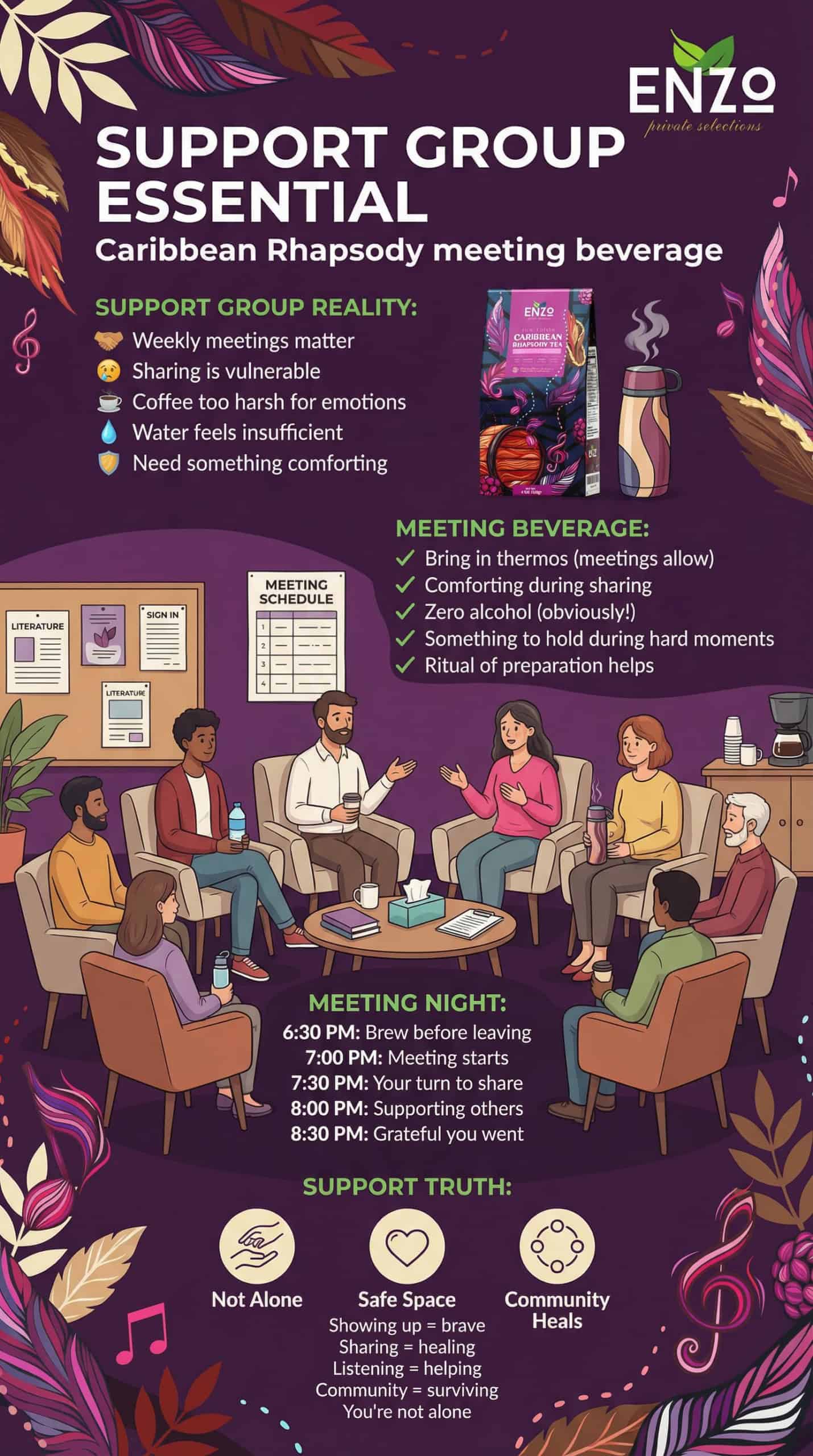
Support Group Basics
Support groups gather people facing similar challenges. Addiction recovery. Grief. Chronic illness. Parenting struggles. Shared experience creates understanding.
Your role as facilitator includes creating safe space. Physical comfort matters. Warm beverages signal hospitality. People share more openly when feeling cared for.
Tea suits support groups perfectly. Caffeine-free options won’t interfere with evening meetings. No alcohol removes temptation for recovery groups. Universal accessibility includes everyone.
Meeting Space Setup
Arrange chairs in circle. No barriers between members. Equal positioning promotes connection. Place tea station visibly but not centrally. Available but not distracting.
Provide 8-10 oz per person for 90-minute meeting. Calculate total: 10 people need 100 oz, roughly 3 quarts. Brew in advance. Keep warm in insulated dispenser.
Offer variety. Herbal for caffeine-sensitive. Green tea for others. Honey and milk alternatives. Choice demonstrates respect for individual preferences.
For more group facilitation, see our gathering planning guide.
Creating Safe Space
Safety means confidentiality, respect, and non-judgment. Establish ground rules first meeting. Review periodically. Consistent boundaries enable vulnerability.
Tea ritual marks transitions. Arriving members pour cup. Settling in signals readiness. End meeting, final refills. The structure contains intense emotions within timeframe.
Some meetings include prayer or meditation. Tea beforehand helps members center. Quiet sipping creates mindful transition from outside world to group space.
Handling Difficult Moments
Intense emotions surface in support groups. Crying. Anger. Despair. Facilitator maintains calm presence. Tea provides grounding tool.
Keep tissues and tea readily available. Member breaking down needs both. Physical comfort supports emotional release. Your prepared space allows safe expression.
Sometimes member dominates discussion. Redirect gently. “Let’s give others chance to share.” Pour more tea. Reset dynamic through small physical action.
Different Group Types
Recovery groups follow specific formats. Twelve-step programs. SMART Recovery. Celebrate Recovery. Research appropriate approach for your group type.
Grief groups need flexibility. No two losses identical. Structure helps but rigidity hurts. Tea provides constant when everything else varies.
Chronic illness groups benefit from shared practical tips. Medical information exchange. Coping strategies. Tea supports extended discussions of complex topics.
For more community building, see our knitting circle guide.
Frequency and Timing
Weekly meetings provide consistent support. Monthly feels too infrequent for acute needs. Biweekly works for maintenance-phase groups.
Evening times accommodate work schedules. 7 PM or 7:30 PM common. Ninety minutes sufficient for 8-12 people sharing. Strict end time respects schedules.
Summer breaks disrupt momentum. Consider virtual meetings or pause with clear restart date. Group continuity matters for member attachment.
Newcomer Integration
New members feel vulnerable. Established members know each other. Facilitate introductions thoughtfully. Tea service provides natural icebreaker.
Pair newcomers with veteran members informally. “Sarah, would you show John where tea setup is?” Simple task creates connection opportunity.
Explain format clearly. New members don’t know unspoken rules. Written guidelines help. Verbal orientation before first share essential.
Boundaries and Burnout
Facilitators burn out from emotional labor. Set clear time boundaries. Meeting ends at scheduled time. No extending repeatedly.
You can’t solve everyone’s problems. Your role: create space, facilitate sharing, maintain safety. Not therapist. Not savior. Not miracle worker.
Rotate facilitation if possible. Sharing responsibility prevents single-person burnout. Develop co-facilitator. The support sustains long-term group viability.
When To Refer Out
Support groups help many situations. Not substitutes for professional care. Know your limits. Recognize when member needs more than peer support.
Active crisis requires professional intervention. Suicidal ideation. Severe mental health symptoms. Domestic violence. Your group provides support, not treatment.
Keep referral resources list. Local therapists. Crisis hotlines. Medical providers. Emergency numbers. Share appropriately when needs exceed group capacity.
Funding and Supplies
Many groups operate on donated supplies. Pass basket for voluntary contributions. Never required. Financial barriers exclude vulnerable people.
Tea relatively inexpensive. $30-40 monthly supplies 10-person weekly group. Bulk purchasing reduces costs. Members often donate when able.
Free meeting space often available. Libraries. Churches. Community centers. Nonprofit organizations. Venues supporting community groups rarely charge.
Virtual Adaptation
Pandemic normalized online support groups. Convenience increases for some. Barriers for others. Hybrid models accommodate both preferences.
Virtual members brew their own tea. Encourage self-care during online meetings. Shared ritual continues despite physical distance.
Recording policy essential. Most support groups prohibit recording for privacy. Virtual platforms make recording easy. Explicit prohibition necessary.
Frequently Asked Questions
How do I start a support group?
Identify need. Find venue. Set date and time. Create simple flyer. Post in relevant locations. Start small. First meeting might have two people. Growth happens gradually.
What if nobody comes?
Persistence required. First few meetings might feel discouraging. Keep showing up consistently. Word spreads slowly. Online posting helps. Be patient.
Do I need professional training?
Depends on group type. Peer-led groups don’t require credentials. Specialized topics benefit from facilitator knowledge. Therapy groups require licensed professional. Match credentials to group needs.
How do I handle disruptive members?
Private conversation first. Explain impact. Request behavior change. If continues, ask them to leave temporarily. Group safety takes priority over single member accommodation.
What about romantic relationships forming?
Common in support groups. Shared vulnerability creates bonds. Discourage active pursuit during meetings. What happens outside group not your business unless disrupting group.
Should groups have maximum size?
Yes. Twelve members maximum for everyone to share adequately. Larger groups need splitting or different format. Intimacy suffers in oversized groups.
How long should someone stay in group?
Varies by need. Some attend few months. Others years. No judgment either way. People leave when ready. Welcome returns if needed later.
What if I can’t facilitate one week?
Cancel meeting or arrange substitute. Members understanding of occasional absences. Consistent cancellation different from occasional. Your reliability matters for group stability.
Do support groups really work?
Research supports effectiveness. Peer support complements professional treatment. Not cure but helpful tool. Outcomes improve when members engage consistently.
How do I end a support group?
Give advance notice. Eight to twelve weeks minimum. Allow processing. Refer members to other resources. Some groups evolve or transfer leadership rather than ending.
External Resources
- SAMHSA: Support group resources
- Mental Health America: Peer support
- National Alliance on Mental Illness: Support groups
Tags: support groups, community care, peer support, safe spaces, mental health
Article Metadata: Title: “Support Group Meetings: Community Space Hospitality”. Author: Enzo Tea. Tags: support, group, meetings:, community, space. Slug: support-group-meetings-community-space. Meta Description: Provide tea at support group meetings. Creates welcoming atmosphere. Simple hospitality supports vulnerable sharing. Purpose: Guide facilitators on creating welcoming support group environments.