Après-Ski Lodge Beverages: Warm Up After Slopes
TL;DR: Drink 16-24 oz hot berry tea immediately after skiing. The warmth and hydration restore body temperature and prevent muscle soreness.
Why Après-Ski Beverages Matter
Skiing depletes your body rapidly. Cold air increases fluid loss through respiration. Physical exertion causes sweating despite cold temperatures. Altitude amplifies dehydration effects. Your body needs immediate rehydration and warming after leaving slopes.
Most skiers reach for hot chocolate, Irish coffee, or beer at lodge bars. These choices create problems. Hot chocolate adds 300+ calories of sugar. Alcohol dehydrates further worsening fluid deficit. Both options slow recovery instead of supporting it.
Hot tea solves these issues perfectly. The warmth restores core temperature. Zero-calorie fruit teas provide hydration without sugar crash. The ritual of sipping hot beverages creates relaxation signaling the body: skiing done, recovery begins.
Research from the Journal of Sports Sciences shows proper hydration after winter sports reduces next-day muscle soreness by 30-40%. The timing matters significantly. Drinking within 30 minutes of stopping provides maximum benefit.
Understanding Post-Skiing Physiology
Skiing creates unique recovery needs different from other exercise.
Core Temperature Drop
Chairlift rides in freezing wind chill core body temperature. Skiing generates heat, but stops between runs allow cooling. By day’s end, many skiers show mild hypothermia symptoms without realizing it.
Hot beverages (160-180°F) consumed immediately raise core temperature faster than external warming alone. The internal heat source works from inside out. Most skiers feel dramatically better within 10-15 minutes of hot drink consumption.
Altitude Dehydration
Ski resorts sit at 7,000-12,000+ feet elevation. The dry mountain air increases fluid loss. You lose 1.5-2 times more water at altitude than sea level during equivalent exercise.
Cold air holds less moisture than warm air. Every breath expels precious water vapor. You rarely notice sweating in cold but perspire significantly inside ski clothing. The combined factors create substantial dehydration.
Muscle Glycogen Depletion
All-day skiing burns 2,000-3,500 calories. Your muscles deplete stored energy. While tea provides no calories, the hydration supports recovery processes. Proper fluid balance allows muscles to repair and refuel efficiently.
Circulation Changes
Cold constricts blood vessels in extremities. Your body prioritizes core organs over hands and feet. This survival mechanism creates the familiar numb fingers and toes.
Hot beverages trigger vasodilation. Blood vessels open allowing improved circulation. The tingling sensation as feeling returns signals successful rewarming.
Tea Selection for Après-Ski Recovery
Different tea varieties suit different recovery needs.
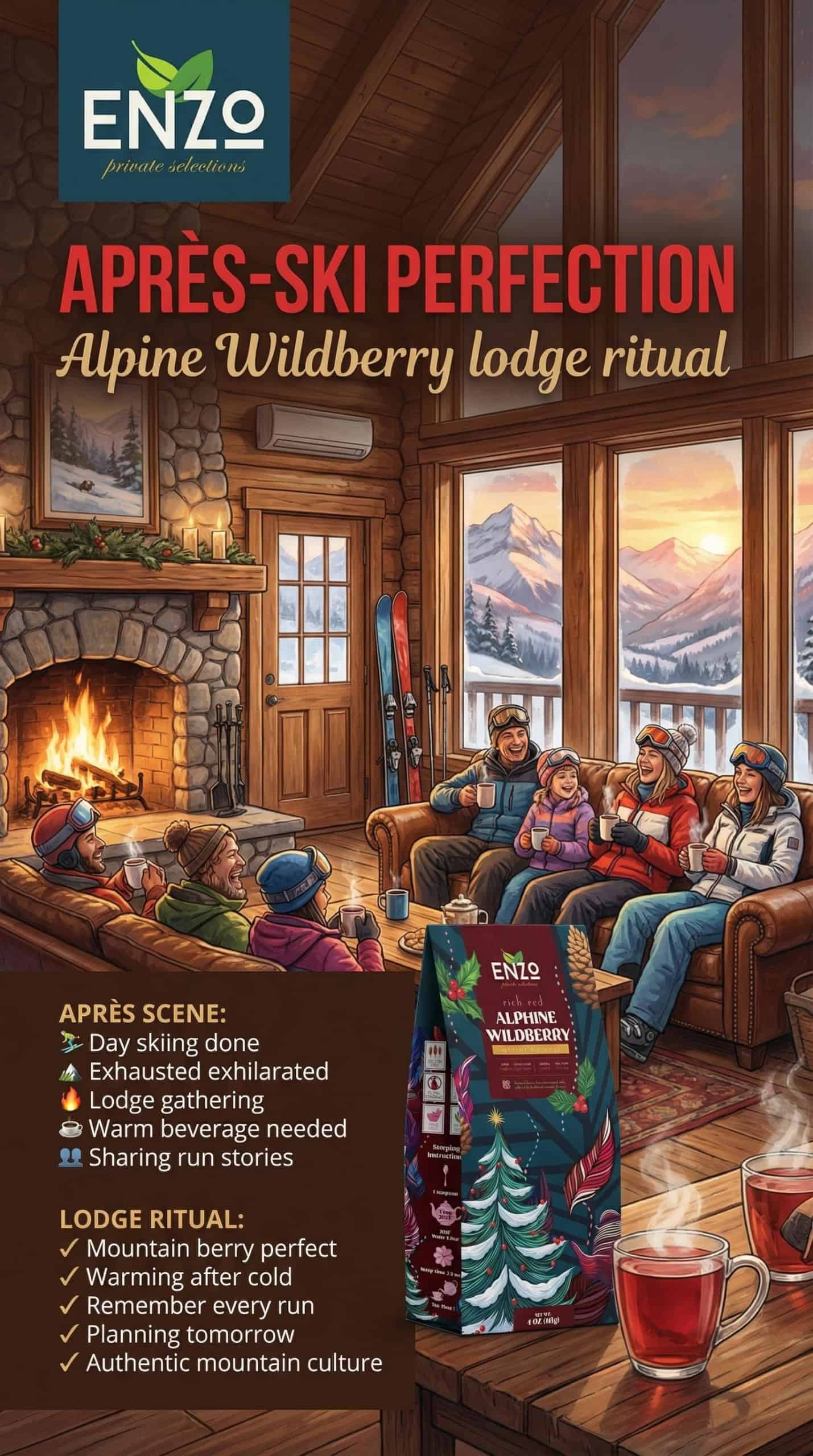
Alpine Wildberry (Top Choice)
The robust forest berry flavor feels substantial after intense physical activity. The deep flavor satisfies in ways subtle teas cannot. The warmth penetrates quickly.
The name itself evokes mountain atmosphere. “Alpine” Wildberry matches the skiing environment psychologically. This mental connection enhances perceived recovery benefits.
Serve very hot (170-180°F). The high temperature provides maximum warming effect. Most skiers finish 12-16 oz within 15 minutes when properly hot.
Crimson Harvest (Runner-Up)
The mixed berry blend offers comforting familiarity. After exhausting ski days, people crave known, reliable flavors. The sweet-tart berry notes satisfy without overwhelming.
Works especially well for less experienced skiers or people uncomfortable with intense flavors when tired. The approachable taste ensures consumption rather than sipping reluctantly.
Caribbean Rhapsody (Mild Option)
Some people dislike strong flavors after intense exercise. Caribbean Rhapsody provides berry notes without Alpine Wildberry’s boldness. The grape undertones add interesting dimension.
Choose this variety for mixed groups including less adventurous drinkers. Everyone finds it acceptable even if not everyone’s favorite.
Jasmine Pearl Green Tea (Morning Only)
The light caffeine (20-30mg) provides gentle energy for afternoon skiing sessions. Drink after morning runs before lunch break. The caffeine timing supports afternoon performance without disrupting evening sleep.
Never serve caffeinated tea as final après-ski beverage. The stimulation conflicts with evening relaxation and sleep preparation.
Optimal Serving Temperature and Timing
Temperature and timing significantly impact recovery effectiveness.
Temperature Guidelines
170-180°F: Ideal après-ski temperature. Hot enough for rapid warming but not burning. Most commercial cup warmers and thermoses maintain this range.
160-170°F: Acceptable but less effective. Provides warmth without maximum core temperature benefit.
Below 160°F: Too cool for après-ski purposes. Fails to create desired warming effect. Feels disappointing after cold day skiing.
Above 180°F: Dangerously hot. Burns mouth preventing comfortable consumption. People sip cautiously instead of drinking therapeutic quantities.
Use digital thermometer checking serving temperature. The precision ensures optimal results. Most lodge kettles overheat water to boiling (212°F). Cool 5-10 minutes before serving or add small amount of cold water reaching target temperature.
Critical Timing Windows
Immediate (0-15 minutes after skiing): Best recovery window. Body most receptive to rehydration and rewarming. Prioritize getting hot tea into skiers quickly.
Good (15-30 minutes after): Still effective but reduced benefit. Core temperature stabilizes somewhat. Hydration absorption slows.
Late (30+ minutes after): Marginal improvement over casual tea consumption. Miss critical recovery window. Body already compensating through other mechanisms.
Plan logistics ensuring quick lodge access and fast beverage service. Some serious skiers brew tea in thermos leaving it in lodge or car. Drink immediately upon return from slopes.
For more on temperature management in beverages, see our snow day cozy guide.
[Image Insert Prompt #111]
Volume and Consumption Strategy
Proper volume restores hydration without causing discomfort.
Recommended Intake
First serving (immediately): 12-16 oz hot tea, consumed within 15 minutes Second serving (30 minutes later): 8-12 oz, consumed at leisure Total post-skiing: 24-32 oz over first hour after leaving slopes
This pattern frontloads hydration when body needs it most. The initial large serving addresses acute deficits. The follow-up maintains recovery momentum.
Consumption Rate
Drink first serving relatively quickly. The rapid intake maximizes warming and hydration benefits. Most people finish 12-16 oz in 10-15 minutes when properly motivated.
Avoid chugging which causes stomach discomfort. Steady, continuous sipping works best. The goal: empty cup before it cools significantly.
Second serving allows slower pace. The crisis hydration completed, you relax and socialize. The continued tea consumption maintains recovery without urgency.
Signs of Adequate Hydration
Warming sensations: Tingling in fingers and toes as circulation restores Reduced thirst: Obvious but often ignored signal Improved mood: Dehydration causes irritability. Proper hydration returns good spirits. Increased urination: Within 30-60 minutes, indicates successful fluid restoration Color returning to face: Flushed cheeks signal improved circulation
Monitor these signs assessing whether additional tea consumption needed.
Lodge Service Strategies
Different lodge situations require different approaches.
Commercial Ski Lodge
Most resorts offer hot beverages. However, prices reach $5-8 per cup. Quality varies dramatically. Some serve excellent tea, others provide sad tea bags in lukewarm water.
Bring your own: Pack Enzo tea bags in ski jacket pocket. Order hot water ($1-2) and steep your own. Saves money ensuring quality.
Thermos in locker: Brew tea in morning, store in lodge locker in insulated thermos. Retrieve immediately after last run. The prepared tea awaits whenever you finish skiing.
Private Lodge or Rental
Full control over tea service. Set up dedicated après-ski station before anyone goes skiing:
- Pre-measure tea bags into mugs (2 bags per mug for strength)
- Fill electric kettle, leave plugged in but off
- Arrange mugs, honey, and stirrers near kettle
- Write simple instructions: “Turn on kettle, wait 5 minutes, pour over tea bags”
Designated “first person back” starts kettle. Everyone else arrives to ready tea. The system ensures nobody waits.
Backcountry Lodge or Hut
Weight and space limited. Pack concentrated supplies:
- Tea bags (minimal weight, maximum value)
- Small thermos pre-filled with hot water
- Backup tea bags for emergency
Backcountry après-ski tea tastes extraordinary. The combination of exhaustion, remote setting, and earned comfort creates memorable experience.
Pairing Après-Ski Tea with Food
Strategic food choices enhance recovery.
Immediate Post-Skiing (0-30 Minutes)
Focus on beverages and simple carbohydrates. Your body needs quick energy:
- Cookies or crackers with tea
- Granola or energy bars
- Fresh fruit (oranges, apples)
Avoid heavy meals immediately. Your digestive system needs time recovering from cold and exertion. Light foods with tea suffice initially.
Later Recovery Meal (45-90 Minutes)
Full après-ski meal once initial recovery completes:
- Hearty soup or stew
- Cheese fondue (classic Alps tradition)
- Hot sandwich or burger
- Pasta dishes
Continue drinking tea throughout meal. The ongoing hydration supports digestion and maintains recovery momentum.
Alcohol Considerations
Many ski traditions involve alcoholic après-ski drinks. If consuming alcohol, follow this pattern:
- First: Hot tea (16 oz)
- Then: Food (substantial snack)
- Finally: Alcoholic beverage (if desired)
The tea and food create foundation preventing alcohol from dehydrating you further. Never drink alcohol before proper hydration restoration.
Group Dynamics and Social Aspects
Après-ski tea service affects social atmosphere.
Creating Ritual
Consistent après-ski tea routine becomes cherished ritual. Groups develop traditions:
- Same mugs for each person
- Specific toast or phrase when gathering
- Designated “tea master” preparing drinks
- Story time sharing best runs while drinking tea
The rituals strengthen bonds and create anticipation. People look forward to après-ski tea as much as skiing itself.
Competitive vs. Recreational Groups
Competitive skiers: Treat recovery seriously. Appreciate quality tea service. Focus on optimal temperature and timing. Less socializing, more functional consumption.
Recreational skiers: Value social atmosphere over perfect technique. More flexible about temperature and timing. Extended conversation while drinking.
Match service style to group composition. Don’t impose athletic recovery protocol on casual vacation skiers seeking fun relaxation.
Family Considerations
Children need extra attention après-ski. Their smaller bodies cool faster and dehydrate more readily:
- Serve tea slightly cooler (150-160°F) preventing burns
- Use smaller mugs (6-8 oz) appropriate for child consumption
- Add honey making flavor more appealing
- Supervise drinking ensuring adequate intake
For more family beverage strategies, explore our hot chocolate alternative guide.
Weather and Condition Adaptations
Different skiing conditions create different recovery needs.
Extremely Cold Days (Below 0°F)
Serve tea hotter (175-180°F). The severe cold requires maximum warming intervention. Consider double-strength tea providing more robust flavor matching extreme conditions.
Spring Skiing (Above 40°F)
Lower urgency for warming. Still need hydration from sun exposure and exertion. Serve tea at 165-170°F. Some people prefer iced tea in spring conditions, though hot remains more effective for recovery.
High Altitude (10,000+ Feet)
Increase volume to 32-40 oz total. The altitude amplifies dehydration effects. More tea needed restoring proper fluid balance.
Powder Days (Deep Snow)
The hardest skiing depletes you most. Increase first serving to 16-20 oz. The intense physical exertion requires aggressive rehydration.
[Image Insert Prompt #111]
Cost Comparison: Bringing vs. Buying
Lodge beverage prices shock many skiers. Home preparation saves substantially.
Commercial Lodge Costs
Hot chocolate: $6-9 per serving Hot tea (commercial): $4-6 per serving Coffee drinks: $7-10 per serving Daily cost (3-4 beverages): $18-36 per person
Weekend ski trip (2 days) spends $36-72 per person on après-ski beverages alone.
Bring-Your-Own Costs
Tea bags (8 bags for weekend): $1.20-1.60 Thermos (one-time purchase): $25-40 Hot water at lodge: $0-2 per refill
Weekend cost: $1.20-3.60 per person Savings per weekend: $32-68 per person
The savings fund lift tickets, equipment, or better accommodations. Over season (10 ski days), saves $320-680 per person.
Frequently Asked Questions
How soon after skiing should I drink tea?
Within 15 minutes for optimal recovery benefits. The immediate consumption addresses core temperature drop and dehydration most effectively. Waiting 30+ minutes reduces therapeutic value significantly.
What temperature should après-ski tea be?
Serve at 170-180°F for maximum warming effect. This temperature provides rapid core heating without burning. Use thermometer ensuring proper temperature. Water straight from kettle (212°F) is too hot.
Which Enzo tea works best after skiing?
Alpine Wildberry is top choice for robust, warming flavor. Crimson Harvest offers comforting berry alternative. Caribbean Rhapsody suits milder preferences. All varieties work well; choose based on personal taste.
How much tea should I drink after skiing?
Drink 16-24 oz immediately, then another 8-12 oz within the next hour. Total 24-32 oz over first hour after leaving slopes. Adjust upward for extreme cold, high altitude, or intense skiing days.
Can I add honey or sugar to après-ski tea?
Yes, small amounts of honey (1-2 teaspoons) add flavor without excessive calories. Avoid large sugar amounts preventing energy crash. The zero-calorie tea provides hydration; honey enhances enjoyment.
Should I drink caffeinated or caffeine-free tea after skiing?
Drink caffeine-free fruit teas for final après-ski beverage. The zero caffeine supports evening relaxation and sleep. Use Jasmine Pearl Green Tea only after morning skiing if planning afternoon runs.
Is tea better than hot chocolate after skiing?
Yes, for recovery purposes. Hot chocolate contains 300+ calories of sugar without hydration benefits. Tea provides equal warming with better hydration and no sugar crash. However, occasional hot chocolate acceptable for treat.
Can I prepare tea in advance for après-ski?
Yes, brew double-strength tea in thermos before skiing. The insulated container maintains temperature 4-6 hours. Add hot water when ready to drink creating perfect strength and temperature.
What if I cannot access hot water at lodge?
Bring large insulated thermos filled with boiling water from accommodation. Pack tea bags separately. Steep tea when needed using thermos water. This method works anywhere regardless of lodge facilities.
Does altitude affect how much tea I need?
Yes, altitude amplifies dehydration. At 10,000+ feet, increase intake to 32-40 oz total. The dry mountain air and increased respiration rate require more fluid replacement than sea-level skiing.
External Resources
For more winter sports and recovery information:
- Journal of Sports Sciences: Winter sports hydration
- National Ski Areas Association: Ski safety
- American College of Sports Medicine: Cold weather exercise
Transform your après-ski experience with proper tea service. The immediate hot beverage dramatically improves recovery and enjoyment. Pack tea for your next ski trip and feel the difference.
title: “Après-Ski Lodge Beverages: Warm Up After Slopes” author: “Enzo Tea” tags: [“après-ski”, “winter beverages”, “ski lodge”, “warm drinks”, “winter sports”] slug: “apres-ski-lodge-tea-beverages” meta_description: “Perfect hot tea beverages for après-ski relaxation. Learn temperature management, timing, and serving strategies for post-skiing comfort.” purpose: “Guide skiers to optimal post-slope beverage choices and preparation”