Grief Support: Gentle Comfort for Grieving Friends
TL;DR: Bring tea when visiting grieving friends. Practical gesture shows care without words. Consistent presence matters more than perfect words.
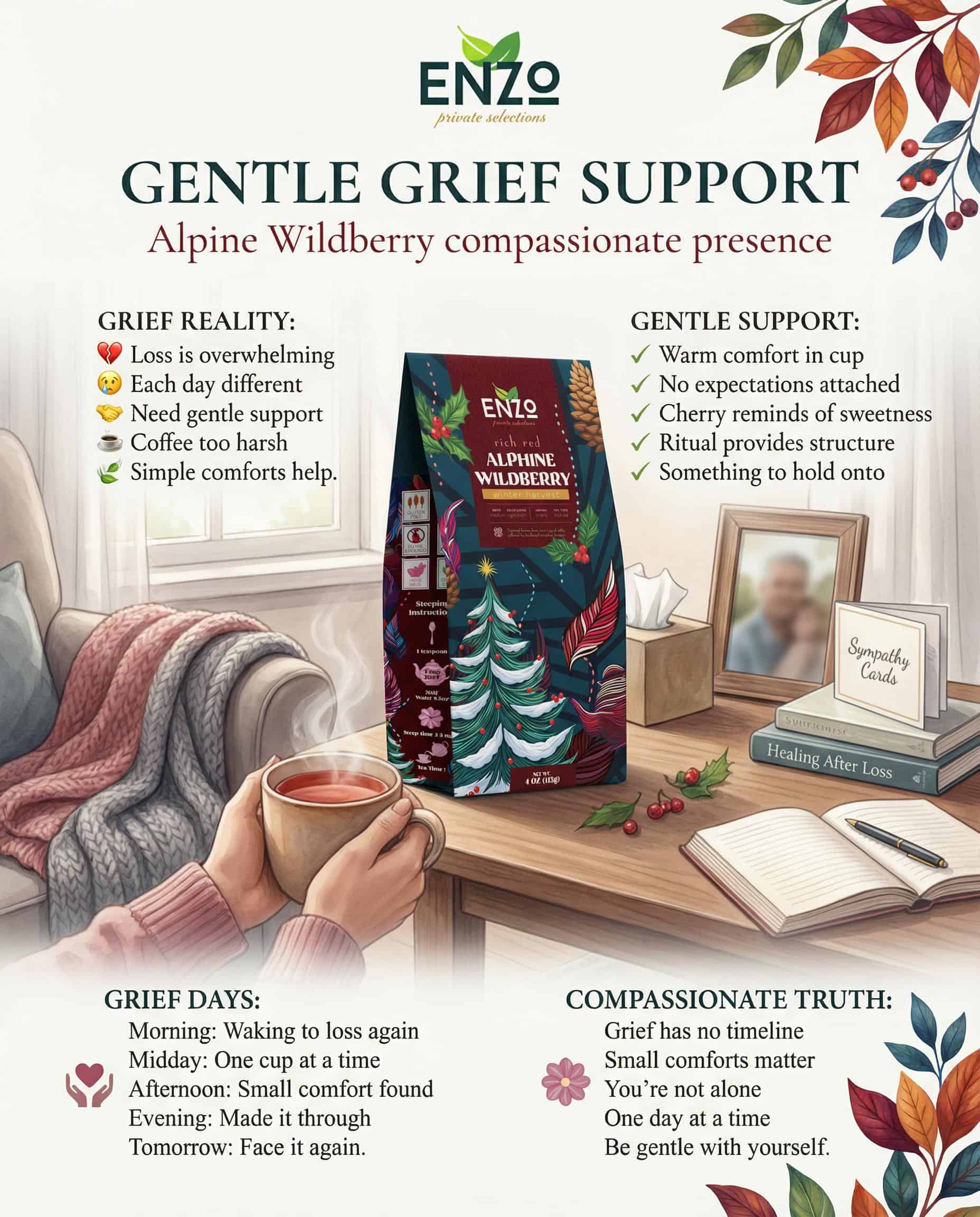
Supporting Someone Through Loss
Your friend lost someone important. You want to help. Words feel inadequate. Fear of saying wrong thing paralyzes many people. Practical support beats poetic condolences.
Bringing tea offers tangible comfort. Warm drink. Something to hold. Shared ritual. The gesture communicates care without requiring perfect words.
Show up repeatedly. Week after funeral matters more than day of. Most people disappear after initial sympathy. Your consistency means everything.
What To Bring
Pack tea bags, honey, and disposable cups if needed. Your friend might lack energy for hosting properly. Self-contained support reduces their burden.
Choose caffeine-free options. Grief disrupts sleep already. Avoid adding stimulation. Herbal varieties or decaf green tea work well.
Bring enough for multiple cups. You might stay 2-3 hours. Refilling cups gives hands something to do during difficult conversations.
For more support strategies, see our comfort care guide.
Initial Visit Timing
Wait 3-5 days after death if possible. Initial chaos settles slightly. Your friend can process your presence better than immediate aftermath.
Call or text first. “Can I visit Tuesday afternoon?” Not “Let me know if you need anything.” Specific offer easier to accept than vague availability.
Arrive with tea already brewed in thermos. Ready to pour immediately. Your friend shouldn’t play host. You provide care, not expect entertainment.
What To Say
“I’m so sorry” covers most situations. Don’t elaborate unless asked. Your presence matters more than words. Silence acceptable and often preferable.
Avoid platitudes. “Everything happens for reason.” “They’re in better place.” “Time heals all wounds.” These harm more than help. Acknowledge pain directly.
Ask specific questions. “What’s hardest right now?” “What do you need today?” Open-ended questions allow them to share or decline naturally.
What Not To Say
Never compare grief. “I know how you feel.” You don’t. Even similar losses differ individually. Acknowledge unique pain.
Don’t rush timeline. “You should be moving on by now.” Grief has no schedule. Your friend proceeds at their pace. Support, don’t push.
Avoid toxic positivity. “At least they’re not suffering.” “Look on the bright side.” Grief deserves space. Let them feel fully without rushing toward happiness.
Practical Help Offers
Vague “Let me know if you need anything” rarely works. Grieving people can’t think clearly. Make specific offers instead.
“I’m bringing dinner Thursday. Lasagna okay?” Or “I’m grocery shopping tomorrow. Text me your list.” Concrete help gets accepted. General offers get declined.
Tea ritual itself practical help. Hydration often forgotten during grief. Hot drink provides comfort and nutrition. Your friend might not eat, but will sip tea.
For more practical support, see our caregiver guide.
Ongoing Support Schedule
Visit weekly for first month. Biweekly for second and third months. Monthly after that. Consistent presence through long grief journey matters more than intensive early support.
Text between visits. “Thinking of you today.” Short messages. No expectation of response. Knowing people remember provides comfort.
Remember difficult dates. Birthday of deceased. Death anniversary. Holidays. Show up these days. Most people forget after first year. Your remembrance means everything.
Different Types of Grief
Parent loss different from spouse loss. Pet death different from human death. Miscarriage different from elder death. All grief valid. Support adapts to specific situation.
Some people process verbally. Others prefer silent presence. Follow their lead. Don’t force conversation if they want quiet. Don’t flee silence if they need space.
Complicated grief requires professional help. If your friend shows no improvement after 6-12 months, gently suggest therapy. Your support supplements, not replaces, professional care.
Supporting Yourself
Supporting grieving friends drains you emotionally. Vicarious trauma real. Protect your own mental health while helping others.
Limit grief support to sustainable level. Help one or two people intensely. More becomes overwhelming. Your effectiveness drops when overtaxed.
Seek your own support. Therapy. Peer consultation. Self-care practices. You can’t pour from empty cup. Maintain your wellness to support others effectively.
Cultural Sensitivity
Different cultures grieve differently. Some loud and expressive. Others quiet and private. Public versus private mourning varies. Respect cultural norms.
Religious beliefs affect grief process. Some find comfort in faith. Others lose faith after loss. Your friend’s spiritual journey their own. Support without imposing beliefs.
Ask about cultural practices. “Is there anything important I should know about how your culture mourns?” The question shows respect and prevents accidental offense.
Long-Term Friendship
Grief changes people. Your friend might not return to “normal.” Accept the changed person. Don’t insist they become who they were before.
Some friendships deepen through grief. Shared vulnerability creates intimacy. Others can’t handle intensity and fade. Both outcomes normal.
Your consistent tea visits become part of healing story. Years later they remember who showed up. Who stayed present. Your support mattered even when feeling inadequate.
Frequently Asked Questions
What if they don’t want visitors?
Respect boundaries. Text support instead. “Leaving tea on your porch. No need to respond.” Give them control over interaction level.
How long should I stay during visits?
One to three hours typical. Watch for fatigue signals. Offer to leave. Some days they need more presence. Other days less. Flexibility key.
What if they cry the whole time?
Let them. Offer tissues. Sit quietly. Don’t try to stop tears. Crying releases grief. Your comfortable presence allows safe emotional release.
Should I mention the deceased person?
Yes. Many people avoid saying names. This hurts grieving person. Share memories. Say their loved one’s name. Keep their memory alive through conversation.
What if I start crying too?
Natural response. Brief tears acceptable. Excessive crying makes you center of attention. Keep focus on grieving friend. Process your emotions elsewhere later.
How do I support someone whose grief I don’t understand?
Admit it. “I can’t imagine your pain, but I’m here.” Honesty about limitation better than false claims of understanding.
What about children’s grief?
Age-appropriate support needed. Consult resources specific to child grief. General adult principles apply but require modification. Consider professional grief counselors for kids.
Should I bring food or just tea?
Both ideal. Simple food requiring no preparation. Tea plus cookies or fruit. Easy consumption during emotional conversation.
What if they’re angry about the death?
Anger normal grief stage. Don’t take it personally. Let them express anger safely. Your steady presence helps them process without judgment.
When do I stop checking in?
Never completely. Frequency decreases but occasional check-ins continue. Grief has no endpoint. Your friendship continues evolving past active grieving period.
External Resources
- National Alliance for Grieving Children: Support resources
- What’s Your Grief: Practical advice
- The Grief Recovery Method: Grief support
Tags: grief support, loss, bereavement care, friendship support, compassionate presence
Article Metadata: Title: “Grief Support: Gentle Comfort for Grieving Friends”. Author: Enzo Tea. Tags: grief, support:, gentle, comfort, grieving. Slug: grief-support-gentle-comfort-friends. Meta Description: Bring tea when visiting grieving friends. Practical gesture shows care without words. Consistent presence matters more than perfect words. Purpose: Guide readers on effectively supporting grieving friends with compassionate presence.