Therapist’s Office Tea Service: Professional Self-Care
TL;DR: Keep thermal carafe (32-48 oz) in office. Drink 8-12 oz between each session. Zero-calorie hydration maintains energy and compassion through 6-8 back-to-back clients.
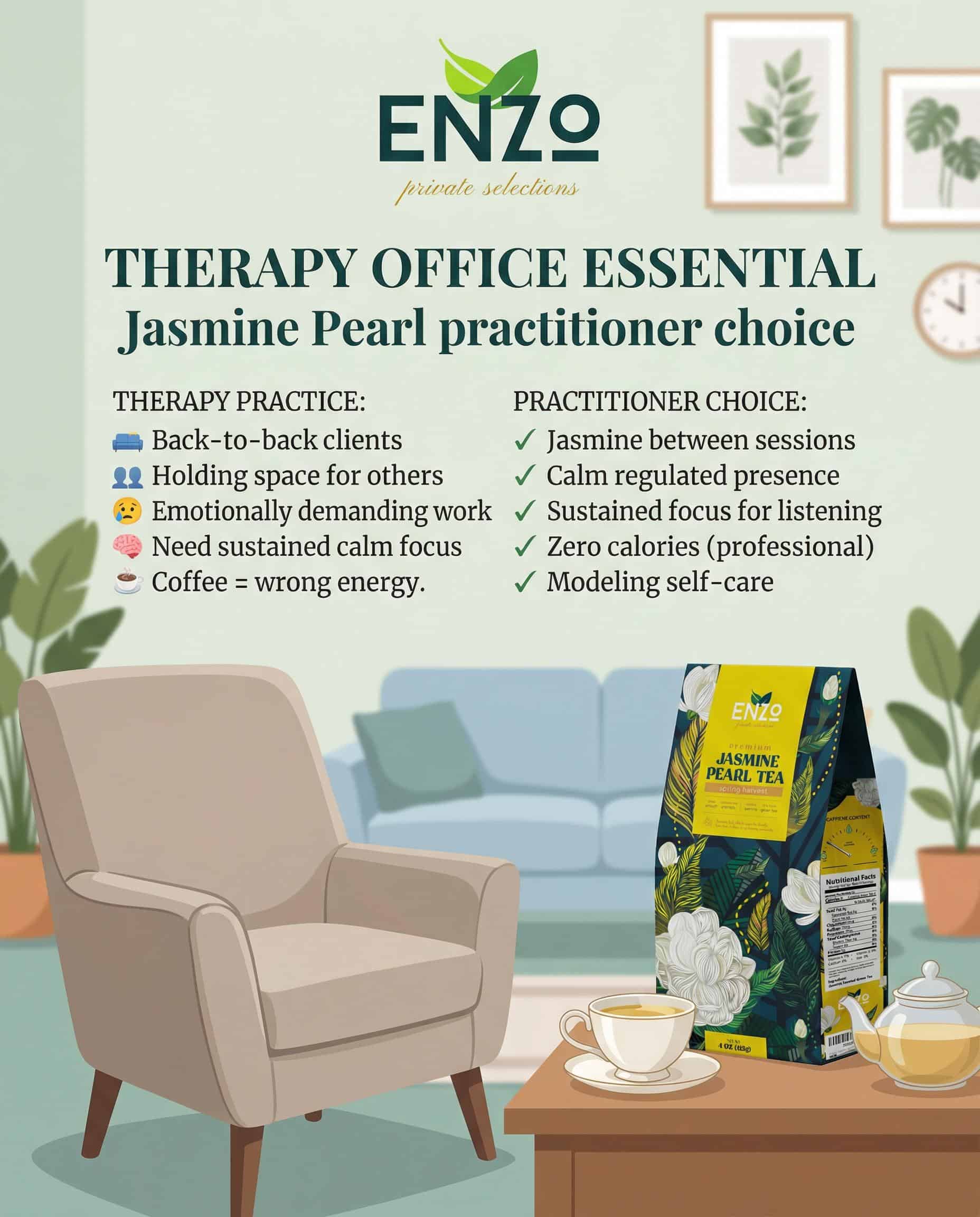
Why Therapists Need Intentional Hydration
Mental health professionals face unique occupational hazards. Compassion fatigue accumulates across consecutive sessions. Emotional labor depletes energy reserves. Active listening demands sustained concentration. The work requires presence impossible when physically depleted.
Most therapists prioritize client needs over personal wellness. Water bottles sit untouched between sessions. Coffee provides temporary energy spikes followed by crashes during afternoon clients. Lunch gets skipped reviewing notes. The self-neglect eventually impairs professional effectiveness.
Strategic tea service provides essential self-care without requiring extensive time. Zero-calorie fruit teas maintain hydration supporting cognitive clarity. Warm beverages offer comfort counterbalancing emotional heaviness. Brief tea rituals create necessary transitions between clients. The structured approach prevents burnout while maintaining professional boundaries.
Research from the Journal of Clinical Psychology shows therapists experiencing adequate self-care demonstrate 30-35% lower burnout rates. Physical wellness directly supports emotional availability required for effective therapy.
Understanding Therapeutic Work’s Physical Demands
The sitting profession creates invisible strain.
Consecutive Session Challenges
Back-to-back scheduling: Many therapists see 6-8 clients daily with minimal breaks. The continuous emotional engagement exhausting.
Limited movement: Sitting 6-8 hours daily causes physical stiffness and reduced circulation. The sedentary nature unhealthy despite meaningful work.
Dehydration progression: Morning hydration depletes across day. By afternoon sessions, many therapists show mild dehydration affecting concentration and empathy.
Voice strain: Continuous talking over 6-8 hours dries throat and vocal cords. Adequate hydration essential for voice health.
Emotional Labor Impact
Secondary trauma: Hearing difficult stories transfers emotional weight. The cumulative burden requires recovery mechanisms.
Empathy fatigue: Sustained compassion without replenishment leads to numbness or overwhelm. Brief self-care moments prevent depletion.
Boundary maintenance: Clear personal care rituals help separate therapist role from personal identity. The distinction protects mental health.
Energy management: Therapy demands full presence. Physical wellness supports emotional availability across entire day.
Cognitive Requirements
Active listening: Processing verbal and nonverbal communication simultaneously requires sharp focus. Dehydration impairs this essential skill.
Pattern recognition: Identifying themes, contradictions, and unconscious material demands mental clarity. Adequate hydration supports cognitive function.
Therapeutic timing: Knowing when to intervene, probe, or remain silent requires judgment. Physical depletion reduces discernment quality.
Session note accuracy: Documenting sessions while fresh requires mental energy. Proper hydration maintains end-of-day effectiveness.
Tea Selection for Therapy Practice
Different varieties support different professional needs.
Alpine Wildberry (Primary Choice)
The robust berry flavor provides substantial satisfaction during brief breaks. The bold taste feels nurturing without being cloying or overly sweet.
Works excellently for full practice days (6-8 clients). The interesting flavor prevents palate fatigue across multiple servings.
Best for: Standard practice days, full client load, winter months
Caribbean Rhapsody (Gentle Alternative)
Familiar berry notes feel comforting without demanding attention. The moderate flavor supports rather than dominates.
Appropriate for days managing particularly heavy client material. The gentle taste provides soothing without excessive sweetness.
Best for: Emotionally difficult days, trauma-focused practice, sensitive periods
Tropic Tiki (Energy Lift)
Bright tropical flavors create mood lift during challenging days. The cheerful taste provides psychological contrast to heavy session content.
Particularly effective for afternoon slump periods. The flavor brightness combats fatigue.
Best for: Afternoon sessions, mood management, summer practice
Jasmine Pearl Green Tea (Morning Only)
Light caffeine (20-30mg) supports morning alertness without afternoon sleep disruption. The subtle sophistication matches professional setting.
Limit to morning sessions only (before 1 PM). Evening caffeine disrupts therapist sleep affecting next-day effectiveness.
Best for: Early morning sessions, assessment days, professional meetings
For more professional wellness strategies, see our meditation ceremony guide.
[Image Insert Prompt #140]
Office Setup and Presentation
Creating professional yet personal tea service.
Private Office Station
Location: Credenza, side table, or shelf visible to therapist but not dominating client view
Essential elements:
- Thermal carafe (32-48 oz capacity)
- Personal mug (therapist only)
- Discreet coaster
- Small towel for spills
- Optional: Honey, lemon in closed containers
Aesthetic considerations:
- Clean, professional appearance
- Matches office decor
- Not cluttered or chaotic
- Maintains therapeutic space ambiance
Client Boundaries
Therapist’s tea only: This represents personal self-care, not hospitality service. Offering clients beverages creates problematic dynamics.
Visible but secondary: Tea station present but not central to therapeutic space. The presence normalizes therapist self-care without dominating.
Modeling healthy behavior: Drinking tea between sessions demonstrates self-care importance. The modeling can be therapeutic for clients struggling with self-neglect.
Professional presentation: Quality containers and clean setup reflect professional standards while honoring personal needs.
Shared Office Considerations
Personal storage: Keep tea supplies in designated drawer or cabinet. Prevent confusion with shared break room items.
Portable option: Insulated bottle therapists can carry between offices or sessions. Maintains consistency regardless of location.
Labeling: Clear marking prevents colleagues accidentally using personal supply during their sessions.
Backup supply: Extra tea bags stored in office desk. Prevents running out during critical practice days.
Between-Session Tea Ritual
Structured approach maximizes restoration in limited time.
Standard 50-Minute Session Schedule
Session end (50 minutes): Client departs Immediate transition (1 minute): Brief physical movement, opening window, adjusting position Tea service (2 minutes): Pour/refill mug, take several deep sips Session notes (4-5 minutes): Document while tea cools slightly, sipping periodically Bathroom/stretch (2-3 minutes): Physical needs, continued tea consumption Review next client file (2 minutes): Prepare while finishing tea Client arrival (0 minutes): Begin new session
The 10-minute between-session window allows adequate tea consumption supporting next client encounter.
Abbreviated Schedule (45-Minute Sessions)
With only 5-minute breaks, prioritize:
- Quick tea refill (1 minute)
- Bathroom if needed (2 minutes)
- Brief notes (2 minutes)
Sip tea during note-taking. The abbreviated format requires efficiency but maintains essential hydration.
Extended Breaks
Occasionally longer breaks (lunch, cancellations) allow:
- Fresh tea brewing
- Proper meal with tea
- Extended restoration
- Administrative tasks with ongoing sipping
These windows provide deeper renewal preparing for afternoon sessions.
Volume and Timing Strategy
Structured intake prevents dehydration across practice day.
Daily Consumption Goals
Morning arrival: 12 oz tea while reviewing day’s schedule Between each session: 6-8 oz minimum Lunch break: 12-16 oz with meal Final sessions: 6-8 oz each break Day’s end: 8-12 oz while completing notes
Total daily intake: 64-80 oz over 8-hour practice day
This exceeds typical sedentary recommendations accounting for voice use, emotional labor, and extended sitting.
Timing Considerations
Avoid final hour: Stop drinking 60 minutes before leaving office. Prevents evening bathroom urgency disrupting personal time.
Front-load hydration: Emphasis morning and midday consumption. The aggressive early intake provides foundation.
Monitor throughout: Check consumption at lunch. Falling behind requires afternoon increase.
Weekend adjustment: Reduce volume on non-practice days. The intense hydration specific to therapy work demands.
Temperature Preferences
Morning: Hot tea (165-175°F) provides comfort starting demanding day Afternoon: Warm to cool (155-165°F) refreshes without overheating Summer: Consider iced tea (45-55°F) for climate control Winter: Very hot tea (170-180°F) combats office chill
Match temperature to seasonal and personal comfort needs.
Managing Compassion Fatigue
Tea rituals support emotional sustainability.
Symbolic Cleansing
Between trauma sessions: Extra thorough tea break. The ritual signals emotional transition helping prevent carrying client material.
Difficult disclosure processing: Allow 2-3 minutes extra tea time. The brief pause processes impact before next client.
Boundary reinforcement: Tea represents therapist needs. The physical act honors personal wellness over constant client focus.
Restoration signal: Warm tea provides somatic comfort. The physical sensation helps regulate therapist’s nervous system after difficult material.
Energy Management
Morning sessions: Often easier. Light tea consumption sufficient.
Afternoon depletion: Increased tea intake combats natural energy decline. The hydration maintains presence quality.
Particularly draining clients: Schedule extra break after when possible. Double tea consumption that break.
End-of-week fatigue: Friday often requires maximum hydration supporting depleted reserves.
Self-Care Modeling
Normalizing therapist needs: Visible self-care demonstrates healthy boundaries. Many clients benefit seeing therapist honor personal wellness.
Permission granting: Therapist drinking tea gives implicit permission for client self-care. The modeling can be powerfully therapeutic.
Professional sustainability: Explains long career longevity. Clients witness sustainable practice rather than self-sacrificing martyr model.
For similar professional wellness approaches, explore our writing ritual guide.
[Image Insert Prompt #140]
Telehealth Practice Adaptations
Virtual therapy creates different dynamics.
Home Office Setup
On-camera station: Small attractive carafe and mug visible but not dominating video frame
Between-session flexibility: Greater movement freedom. Can brew fresh tea, stretch more extensively.
Client-facing considerations: Some clients appreciate seeing therapist self-care. Others find it distracting. Assess individually.
Technology integration: Mute during sips if concerned about audio. Most clients unbothered by brief drinking.
Advantages of Virtual Format
Immediate access: Full kitchen available for fresh brewing, varied preparation
Reduced commute: Extra time allows proper tea preparation and consumption
Comfort optimization: Home environment supports self-care more readily
Flexible scheduling: Easier incorporating extended tea breaks as needed
Maintaining Boundaries
Separate work tea: Distinct from family/personal tea consumption. Maintains professional separation even at home.
Dedicated workspace: Tea station in therapy space only. Reinforces work-life boundaries.
Schedule adherence: Same structured breaks as office practice. Prevents home-based schedule creep.
Group Practice and Supervision
Collective professional wellness.
Group Tea Culture
Shared supply: Bulk tea purchase for practice. Individual preferences honored within group selection.
Break room station: Central elegant setup encouraging all therapists’ hydration
Modeling for trainees: Supervisors drinking tea demonstrates self-care importance for early career therapists
Peer support: Brief tea encounters between sessions provide colleague connection
Supervision Sessions
Supervisor preparation: Tea service demonstrates self-care even during teaching/supervision
Supervisee learning: Observing healthy boundaries and personal care in supervision context
Difficult case consultation: Tea provides grounding during challenging supervision discussions
Long supervision blocks: Adequate hydration maintains supervisor’s teaching effectiveness
Cost Analysis for Practice Sustainability
Professional self-care costs should be practice expense.
Alternative Beverage Costs
Coffee shop habit:
- Daily visit: $4-6
- Annual cost (240 work days): $960-1,440
Energy drinks:
- Afternoon boost: $3-4 daily
- Annual cost: $720-960
Convenience store purchases:
- Variable: $2-4 daily
- Annual cost: $480-960
Tea-Based Practice Care
Initial investment:
- Quality thermal carafe: $40-60
- Professional mug: $15-25
- Storage containers: $10-15
- Total: $65-100 one-time
Annual tea cost:
- Daily consumption (6-8 bags): $0.90-1.20
- Annual cost (240 days): $216-288
Total first year: $281-388 Subsequent years: $216-288
Annual savings: $264-1,152 versus commercial alternatives
The modest cost represents practice expense supporting professional effectiveness.
Frequently Asked Questions
How much tea should therapists drink during practice days?
Drink 64-80 oz over 8-hour practice day. Consume 6-8 oz between each session, 12-16 oz during lunch. The high volume accounts for extended sitting, voice use, and emotional labor demands.
Should I offer tea to clients?
No, therapist’s tea represents personal self-care, not hospitality service. Offering clients beverages creates problematic therapeutic dynamics. Maintain clear boundary that tea supports therapist wellness enabling quality client care.
Which Enzo tea works best for therapy practice?
Alpine Wildberry suits full practice days with robust flavor. Caribbean Rhapsody provides gentle comfort for emotionally difficult days. Jasmine Pearl Green Tea supports morning alertness. Choose based on daily demands and personal preference.
Can drinking tea during sessions appear unprofessional?
Drinking between sessions, not during, maintains professional boundaries. The visible self-care actually models healthy behavior. Most clients appreciate therapist maintaining personal wellness enabling quality presence.
How do I manage tea breaks with back-to-back sessions?
Use 10-minute between-session windows efficiently: quick pour (1 min), notes while sipping (4-5 min), bathroom (2-3 min), review next client (2 min). Thermal carafe eliminates brewing time.
Does hydration really affect therapeutic effectiveness?
Yes, research shows 2% dehydration reduces cognitive function 10-15%. This impairs active listening, pattern recognition, and therapeutic timing. Proper hydration directly supports professional effectiveness.
What if I need caffeine for afternoon sessions?
Limit caffeinated tea (Jasmine Pearl) to morning only. Afternoon caffeine disrupts evening sleep affecting next-day effectiveness. Use flavorful fruit teas combating afternoon fatigue through proper hydration.
How do telehealth practices differ?
Virtual therapy allows greater flexibility with fresh brewing and varied preparation. Maintain same structured breaks despite home setting. Some therapists keep tea on-camera; others off-screen. Assess client-by-client.
Should tea service be practice expense?
Yes, professional self-care supporting practice sustainability warrants business expense. Quality carafe, tea supply, and related items represent investment in professional effectiveness and burnout prevention.
Can I drink tea while documenting session notes?
Yes, many therapists sip tea during note-taking between sessions. The hydration supports concentration while multitasking. The brief ritual also provides transition helping process previous session.
External Resources
For more therapist wellness and professional self-care:
- Journal of Clinical Psychology: Therapist self-care research
- American Psychological Association: Psychologist health
- The Therapy Institute: Preventing burnout
Sustain your therapy practice through structured tea self-care. The simple ritual maintains physical and emotional wellness supporting long-term professional effectiveness. Implement this system starting tomorrow’s practice day.
title: “Therapist’s Office Tea Service: Professional Self-Care” author: “Enzo Tea” tags: [“therapist self-care”, “professional wellness”, “mental health professionals”, “therapy practice”, “counselor wellness”] slug: “therapist-office-tea-service-self-care” meta_description: “Optimize therapist wellness with strategic office tea service. Learn client-facing presentation, between-session rituals, and professional boundaries.” purpose: “Guide mental health professionals to maintain self-care through structured tea rituals in practice”