Writing Ritual Tea: Fuel Your Creative Practice
TL;DR: Brew 12-16 oz tea before writing. The preparation ritual signals your brain: writing time begins. The beverage sustains 60-90 minute focused sessions.
Why Writers Need Tea Rituals
Writing requires summoning creativity on demand. You cannot wait for inspiration striking randomly. Professional output demands consistent production.
Rituals trigger creative states reliably. The repetitive actions—brewing tea, filling cup, sitting at desk—signal your subconscious: time to write. After 2-3 weeks, the tea ritual alone activates writing mindset.
Many famous writers used beverage rituals. Balzac drank 50 cups of coffee daily (unhealthy, not recommended). Maya Angelou kept sherry nearby. Hemingway had his morning routine. The specific beverage matters less than the ritualistic consistency.
Research from the British Journal of Psychology shows ritualized activities reduce anxiety and improve task performance by 35-40%. The structured approach to writing eliminates decision paralysis.
Understanding Writer’s Block and Hydration
Many writing blocks stem from physical causes disguised as creative problems. Dehydration tops the list.
The European Journal of Clinical Nutrition found 37% of people mistake thirst for other sensations. Your “writer’s block” might be dehydration creating cognitive fog.
Brain tissue contains 73% water. Just 2% dehydration reduces mental performance 10-15%. That missing sentence might appear after drinking tea, not after staring harder at screen.
Writers sit for hours forgetting physical needs. The focused concentration ironically prevents noticing thirst signals. Ritualized tea consumption solves this problem. The habit maintains hydration automatically.
For more on the hydration-focus connection, see our study session guide which explores how proper fluid intake supports sustained mental work.
Creating Your Writing Tea Ritual
Effective rituals feel personally meaningful while remaining practically sustainable.
The Basic Structure
Step 1: Preparation phase (5 minutes) Select tea variety matching writing goals. Heat water. Watch kettle, allowing mind to wander. This mental loosening prepares creativity.
Step 2: Steeping period (5-7 minutes) Add tea to cup. Set timer. During steeping, review previous day’s writing or session notes. The brief review activates story world.
Step 3: Intention setting (2 minutes) As tea cools, set session intention. Word count goal, scene completion, or time duration. The conscious target directs effort.
Step 4: First sip ritual (1 minute) Take first sip deliberately. Close eyes. Taste fully. This moment marks transition from preparation to writing proper.
Step 5: Write (60-90 minutes) Begin typing or writing. Sip tea throughout. The beverage presence maintains ritual connection during actual work.
The 15-minute pre-writing ritual feels substantial. However, the psychological preparation significantly improves output quality and quantity. Investment pays dividends.
Timing Considerations
Morning writers: Begin ritual 15 minutes after waking. The buffer allows full consciousness before demanding creativity.
Evening writers: Start ritual after dinner settles. Not immediately after eating. The 30-minute gap prevents sluggish fullness.
Lunch break writers: Eat light lunch 45-60 minutes before ritual. Heavy meals destroy afternoon writing productivity.
Consistency matters more than specific timing. Write at same time daily when possible. Your creative brain learns the schedule.
Tea Selection for Different Writing Types
Writing genres and styles benefit from specific tea varieties. Strategic selection enhances appropriate mental states.
Fiction Writing (Any Fruit Tea)
Narrative fiction requires relaxed imagination. Zero-caffeine fruit teas prevent overthinking that stifles creativity.
Caribbean Rhapsody for comfortable, character-driven stories. The familiar berry comfort matches intimate narratives.
Tropic Tiki for adventure, travel, or exotic settings. The tropical brightness matches tone of escapist fiction.
Alpine Wildberry for mysteries, thrillers, or complex plots. The robust flavor suits intricate storylines.
Crimson Harvest for romance or emotional narratives. The sweet-tart berry blend matches emotional depth.
The caffeine-free formula means evening writing sessions do not disrupt sleep. Many fiction writers work nights after day jobs end.
Non-Fiction/Technical Writing (Jasmine Pearl Green Tea)
Research-heavy writing, academic papers, and technical documentation benefit from light caffeine. The 20-30mg provides alertness without anxiety.
The L-theanine in green tea creates calm focus. You maintain analytical thinking while remaining relaxed. This balance suits fact-checking and precise language requirements.
Similar to recommendations in our morning tea latte guide, green tea provides sustained focus without coffee’s crash.
Poetry (Alpine Wildberry or Jasmine Pearl)
Poetry requires both precision and inspiration. Choose variety based on time of day and mental state.
Morning poetry sessions: Jasmine Pearl Green Tea. The gentle caffeine supports linguistic precision. The floral notes match poetry’s aesthetic sensitivity.
Evening poetry sessions: Alpine Wildberry. The zero caffeine protects sleep. The complex berry profile matches poetry’s layered meanings.
Poetry often happens in shorter bursts than prose. The tea ritual still matters, creating space for condensed creative work.
Journalism/Deadline Writing (Jasmine Pearl Green Tea)
Fast-paced, deadline-driven writing needs sustained alertness. The light caffeine supports rapid production.
However, avoid coffee’s intensity. Jittery, anxious writing creates poor quality. The calm alertness from green tea produces better journalism.
Journalists often write multiple pieces daily. The tea ritual marks transitions between stories, helping mental reset.
Editing Sessions (Any Variety)
Editing requires different mental state than drafting. The analytical work suits any tea based on time of day.
Morning editing: Jasmine Pearl for alert precision Evening editing: Any fruit tea for relaxed review
The tea ritual signals shift from generative writing to refinement mode. Your brain recognizes the difference.
[Image Insert Prompt #98]
Volume and Refill Strategy
Proper hydration planning prevents interrupting writing flow.
Session Length Planning
Short session (30-45 minutes): 8-12 oz tea Standard session (60-90 minutes): 12-16 oz tea Extended session (2-3 hours): 24-32 oz tea across two servings
Prepare adequate volume before starting. Interrupting to brew fresh tea breaks concentration and flow state. The momentum loss costs 10-15 minutes recovering focus.
Thermal Solutions
Use insulated mug or thermal carafe. Standard ceramic mugs cool rapidly. Cold tea disrupts ritual pleasure.
High-quality insulated containers maintain temperature 90-120 minutes. This duration matches most writing sessions perfectly. The hot beverage remains enjoyable throughout work.
The Refill Ritual
Extended sessions require refills. Transform necessary interruption into intentional break:
- Save work
- Stand and stretch
- Brew fresh tea using saved bags
- Walk briefly (2-3 minutes)
- Review last paragraph written
- Return with fresh tea and renewed focus
The structured break prevents “quick refill” becoming 30-minute distraction spiral.
Temperature and Writing Flow
Tea temperature affects concentration subtly but significantly.
Optimal Temperature Range
160-170°F provides maximum enjoyment without burning. The warmth comforts without demanding careful attention. Too-hot tea forces constant attention to drinking, distracting from writing.
140-150°F works for slow, contemplative writing. The moderate warmth still comforts while allowing unconscious sipping.
Room temperature acceptable but loses ritual significance. The warmth’s psychological comfort contributes to writing state.
Temperature as Timer
Some writers use cooling tea as session timer. Start writing with very hot tea. When tea reaches room temperature, session ends. The natural timer prevents obsessive clock-watching.
This organic approach particularly suits creativity-focused sessions where strict time limits feel constraining.
Writing Environment and Tea Placement
Physical setup influences writing success as much as mental preparation.
Desk Arrangement
Tea position: Right or left of keyboard/notebook (opposite dominant hand). Within easy reach but not in direct typing path.
Coaster essential: Protects desk and writing materials from moisture. The small detail shows respect for writing space.
Away from electronics: Position away from laptop or phone. Spilled tea ruins expensive devices. The 12-inch buffer provides safety.
Visible but not central: Tea should occupy peripheral vision. The presence comforts without demanding attention.
Alternative Writing Spaces
Coffee shops: Bring travel mug with pre-brewed tea. Order small drip coffee for politeness. Sip your tea while working. Saves money while maintaining ritual.
Libraries: Thermal mug with secure lid prevents spills near books. The quiet environment enhances writing focus. Tea ritual works anywhere.
Outdoor writing: Insulated container essential. Temperature extremes require protection. Nature settings inspire many writers.
Combining Tea Ritual with Other Writing Practices
Tea integrates beautifully with complementary writing techniques.
Morning Pages
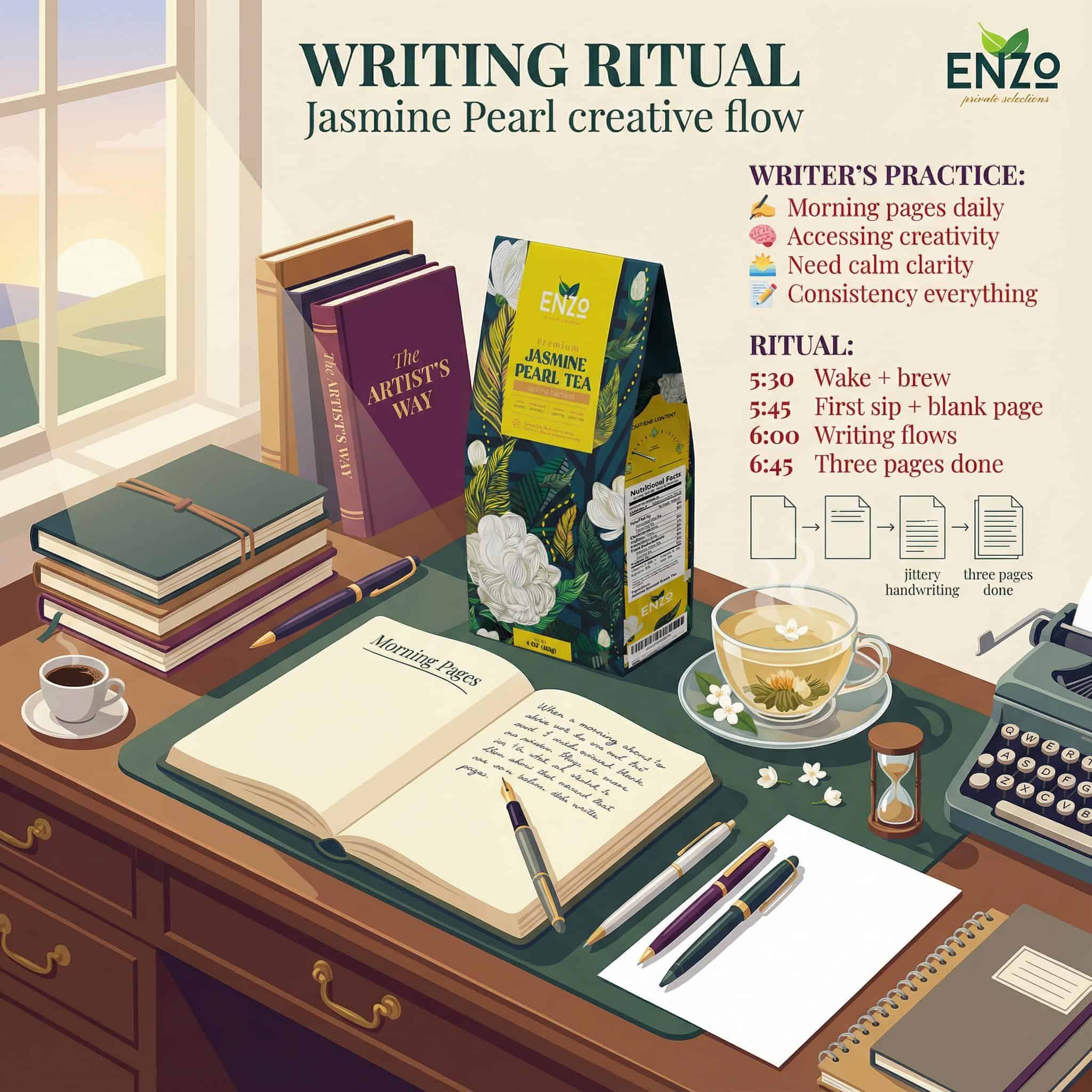
Julia Cameron’s Artist’s Way recommends three pages of stream-of-consciousness writing upon waking. Tea ritual enhances this practice:
- Brew tea while still groggy
- Sip while writing uncensored thoughts
- The warm beverage eases into consciousness
- Finish tea as final page completes
The combination creates powerful creative unblocking. Many writers credit morning pages plus tea with solving persistent writing problems.
Pomodoro Technique
Work in 25-minute focused bursts with 5-minute breaks. Tea ritual modifications:
- Brew before first pomodoro
- Sip during work segments
- Stand and stretch during breaks
- Fresh tea after 4 pomodoros (2 hours)
The tea presence throughout pomodoros maintains ritual connection while using proven productivity technique.
Word Sprints
Competitive or solo timed writing bursts. Tea preparation marks beginning:
- Set sprint parameters
- Brew tea
- First sip signals “go”
- Write furiously
- Celebrate progress with more tea
The ritual bookends intense productivity, creating satisfying sense of completion.
Writing Groups
Virtual or in-person co-working sessions. Tea ritual personal but synchronized:
- Everyone brews simultaneously
- First sips together over video
- Silent writing begins
- Shared breaks for tea refills
The communal ritual creates connection despite separate physical locations.
Managing Writer’s Anxiety with Tea Ceremony
Many writers suffer anxiety about their work. Tea ritual provides grounding.
Pre-Session Nerves
Before beginning difficult scenes or important projects, extended tea ceremony helps:
- Boil water slowly, watching bubbles form
- Steep tea for full 7 minutes, no rushing
- Add elaborate ritual elements (special cup, candle, music)
- Drink half tea before writing single word
The deliberate slowing counteracts anxious urgency. The forced pause creates mental space for creativity.
This approach mirrors meditation tea ceremonies, where deliberate tea preparation becomes moving meditation.
Post-Session Validation
After difficult writing sessions, closing tea ritual matters:
- Brew fresh cup
- Sit away from desk
- Sip while reviewing session’s word count
- Acknowledge effort, not just output
- Plan next session
The closure prevents carrying writing anxiety into evening. You officially end work day.
Budget-Conscious Writing Ritual
Writing careers often involve lean financial periods. Tea ritual works on any budget.
Cost Analysis
Coffee shop writing habit:
- Daily coffee shop visit: $5-7
- Monthly cost (20 writing days): $100-140
- Annual cost: $1,200-1,680
Home tea ritual:
- Tea per session (3-4 bags): $0.50-0.70
- Monthly cost: $10-14
- Annual cost: $120-168
- Savings: $1,080-1,512 annually
The savings fund writing conferences, courses, or software. The modest tea cost enables better resource allocation.
Bulk Strategies
Buy tea boxes (30+ bags) reducing per-bag cost. Store properly in cool, dry place. The tea maintains quality 12-18 months.
One box serves 7-10 writing sessions. The convenience and economy make ritual sustainable even during tight financial periods.
[Image Insert Prompt #98]
Adapting Ritual for Different Writing Schedules
Professional obligations force varied writing times. Ritual adapts while maintaining essence.
Early Morning Writing (5-7 AM)
Full ritual despite drowsiness. The complete preparation wakes creative brain gradually. Never skip ritual claiming time constraints. The 15-minute investment returns hours of quality writing.
Use Jasmine Pearl Green Tea. The light caffeine assists transition from sleep to creativity.
Lunch Break Writing
Compressed 30-45 minute sessions. Abbreviated ritual:
- Pre-brew tea at home
- Bring in thermal mug
- Five-minute intention setting
- Write immediately
The shortened version maintains essential elements while respecting time limits. Every minute counts during lunch writing.
Evening Writing (After Day Job)
Full ritual essential for transition. You must shed day-job mindset before accessing creativity:
- Arrive home
- Change clothes (symbolic shedding)
- Brew tea with full attention
- Complete ritual before opening manuscript
The boundary prevents work stress contaminating creative time. Writers with demanding day jobs especially need clear transitions.
Weekend Marathon Sessions
Extended 4-6 hour writing days. Enhanced ritual:
- Begin with elaborate ceremony
- Multiple tea preparations throughout
- Each refill marks chapter or section completion
- Celebrate output with special tea variety
The extended ritual matches extended output. The tea consumption marks progress visibly.
Tracking Ritual’s Impact on Output
Data helps refine ritual practice.
Metrics to Monitor
Word count: Obvious measurement. Compare sessions with and without ritual. Most writers see 20-30% increase with consistent ritual.
Subjective quality: Rate writing quality 1-10 after each session. Ritual sessions typically score higher.
Time to flow state: How many minutes until fully absorbed in writing? Ritual reduces this to 10-15 minutes versus 30+ without.
Session consistency: Do you write scheduled days? Ritual improves adherence by making writing time pleasant.
Simple Tracking
Spreadsheet or notebook:
- Date
- Tea variety used
- Words written
- Quality rating (1-10)
- Notes on experience
After 30 days, patterns emerge. You discover optimal tea varieties, timing, and ritual elements for personal productivity.
Frequently Asked Questions
Does tea really help writing or is it placebo?
Both factors contribute. Ritualized behavior creates psychological triggers improving performance (proven). Proper hydration maintains cognitive function (proven). Warm beverages reduce stress hormones (proven). Even if partially placebo, the measurable output improvement matters more than mechanism.
Which Enzo tea works best for fiction writing?
Any fruit tea (Caribbean Rhapsody, Tropic Tiki, Alpine Wildberry, Crimson Harvest) works excellently. Zero caffeine prevents overthinking. Choose flavor matching story mood or personal preference. Rotate varieties preventing ritual staleness.
Should I drink tea before or during writing?
Both. Brew and begin drinking during pre-writing ritual (before). Continue sipping throughout writing session (during). The continuous presence maintains ritual connection and ensures adequate hydration. Plan 12-16 oz for 60-90 minute session.
What if the ritual becomes procrastination?
Set ritual time limit (15 minutes maximum preparation). Use timer. When alarm sounds, writing begins regardless of “readiness” feeling. Ritual should launch writing, not replace it. If consistently using ritual to avoid writing, examine resistance causes.
Can I write without tea if I forget to buy it?
Yes, but substitute similar ritual. Hot water with lemon, herbal tea, or even just warm water. The ritualistic consistency matters more than specific beverage. However, maintaining tea stock shows commitment to practice.
How much tea is too much during writing sessions?
Limit caffeine to one session of Jasmine Pearl Green Tea (20-30mg) daily. Fruit teas (zero caffeine) can be consumed freely. Stop drinking 2 hours before sleep to protect rest. Excessive liquid intake (80+ oz daily) requires medical consultation.
Does cold or hot tea work better for writing?
Hot tea (160-170°F) creates strongest ritual association. The warmth comforts and focuses attention. Cold tea works but lacks psychological impact. Choose hot except in very warm environments or personal preference for cold beverages.
Should different writing projects use different tea varieties?
Some writers assign varieties to projects (“mystery novel gets Alpine Wildberry”). This creates stronger mental association. Others prefer consistency across projects. Experiment discovering what strengthens your practice. No universal right answer.
How long until tea ritual improves my writing?
Psychological triggers form after 21-30 consistent repetitions. Perform complete ritual before every writing session for one month. The association solidifies around week 3-4. Output improvements often appear earlier, within 7-10 days.
What if I dislike tea?
Substitute any hot beverage you enjoy. Coffee works (monitor caffeine). Herbal infusions work. Even hot water with lemon. The ritual structure and hydration matter more than specific drink. Find beverage making writing time pleasant.
External Resources
For more writing and creativity resources:
- British Journal of Psychology: Ritual and performance research
- The Artist’s Way: Julia Cameron’s creative recovery techniques
- Writer’s Digest: Writing craft and career
Establish your writing tea ritual today. The simple practice transforms irregular writing attempts into consistent creative output. Brew tea and write your next page.
title: “Writing Ritual Tea: Fuel Your Creative Practice” author: “Enzo Tea” tags: [“writing ritual”, “creative writing”, “productivity”, “focus drinks”, “writer’s routine”] slug: “writing-ritual-tea-creative-fuel” meta_description: “Establish powerful writing rituals using tea. Learn timing, variety selection, and techniques for sustained creative output.” purpose: “Guide writers to optimize their creative practice through tea rituals”