Test Taking Ritual: Tea for Exam Performance
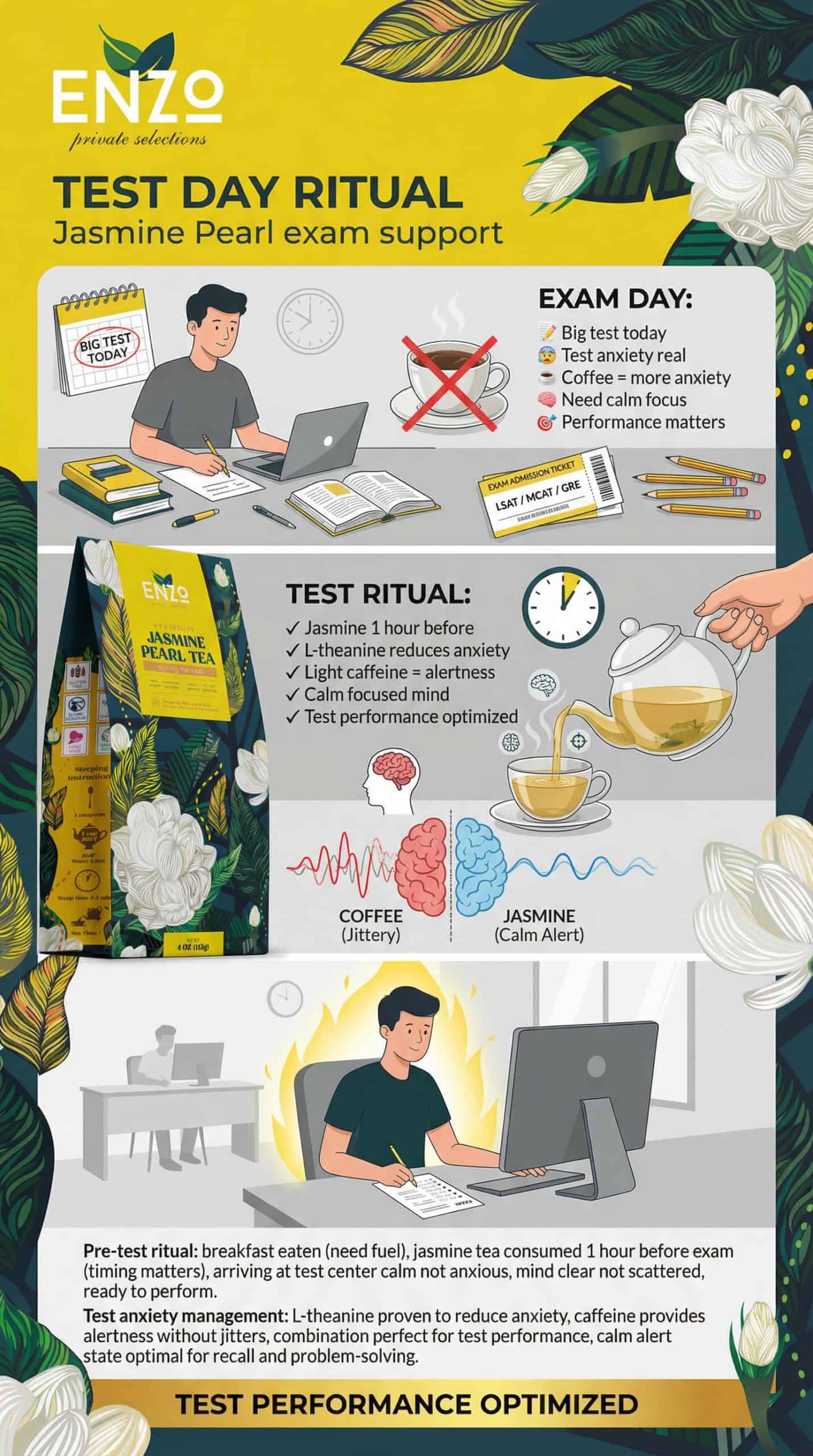
TL;DR: Drink 8-12 oz Jasmine Pearl Green Tea 60 minutes before exam. Sip water during test. Light caffeine plus hydration optimize focus without bathroom urgency.
Why Test Performance Depends on Beverage Strategy
Standardized tests, final exams, and professional certifications demand peak cognitive function under pressure. Your beverage choices before and during testing directly affect results.
Most students make critical mistakes. Excessive caffeine creates jitters preventing clear thinking. Energy drinks cause crashes mid-exam. Sugar spikes then tanks during critical sections. No hydration leads to mental fog. Each error costs points.
Strategic tea consumption provides advantages over random beverage choices. Light caffeine enhances alertness without anxiety. L-theanine in green tea promotes calm focus. Zero-calorie fruit teas maintain hydration without blood sugar fluctuations. The planned approach optimizes conditions for success.
Research from Nutrients journal shows proper pre-test hydration improves cognitive performance 12-15% compared to inadequate fluid intake. The L-theanine and caffeine combination in green tea increases attention accuracy 15-20% versus caffeine alone.
Understanding Test Anxiety and Caffeine
The relationship between alertness and anxiety requires careful management.
The Inverted-U Performance Curve
Too little arousal: Sluggishness, difficulty concentrating, slow processing. Below optimal performance.
Optimal arousal: Alert, focused, quick thinking, calm confidence. Peak performance zone.
Too much arousal: Anxiety, jitters, racing thoughts, inability to concentrate. Below optimal performance.
Caffeine moves you up the arousal curve. The key: reaching optimal zone without overshooting into anxiety territory.
Caffeine Dosing for Tests
Under-caffeinated (0-20mg): Most students perform below potential. Insufficient alertness for sustained focus.
Optimal range (30-50mg): Peak performance zone for most people. Alert without anxious.
Over-caffeinated (100mg+): Jitters, bathroom urgency, anxiety, racing heart. Performance degradation.
Jasmine Pearl Green Tea provides 20-30mg per 8 oz serving. Two servings (16 oz total) places most students in optimal range.
Individual Caffeine Sensitivity
Low sensitivity: May need 2-3 cups green tea (40-60mg) reaching optimal state.
Average sensitivity: 1.5-2 cups green tea (30-50mg) creates ideal conditions.
High sensitivity: Single cup green tea (20-30mg) or fruit tea only prevents over-arousal.
Learn your sensitivity through practice tests before high-stakes exams.
Pre-Test Tea Protocol
Strategic timing maximizes benefits while minimizing risks.
Timeline for Morning Exams (9-10 AM start)
7:00 AM – Wake up
- Light breakfast with first glass water (8 oz)
- Begin hydration early
7:45 AM – First tea dose
- 8-12 oz Jasmine Pearl Green Tea
- With or after breakfast
- Caffeine takes 30-45 minutes reaching peak effect
8:00-8:30 AM – Continued prep
- Light review of materials
- Second glass water (8 oz) or caffeine-free fruit tea
- Use bathroom before leaving
8:45 AM – Final preparation
- Use bathroom again
- Small sip of water if thirsty
- Avoid drinking large amounts
9:00 AM – Exam begins
- Optimal caffeine timing
- Properly hydrated
- Empty bladder
Timeline for Afternoon Exams (1-2 PM start)
10:00 AM – Morning routine
- Normal breakfast
- Regular morning caffeine if habitual
- Begin hydration
11:30 AM – Light lunch
- Small meal preventing sluggishness
- 8 oz water or fruit tea
12:00 PM – Strategic tea dose
- 8-12 oz Jasmine Pearl Green Tea
- 60 minutes before exam
- Bathroom use
12:45 PM – Final prep
- Last bathroom visit
- Minimal fluid intake
- Mental preparation
1:00 PM – Exam begins
- Peak caffeine benefit
- Adequate hydration
- No bathroom urgency
Timeline for Evening Exams (6-7 PM start)
Consider carefully: Evening caffeine may disrupt sleep affecting next day performance. For most evening exams, stick to caffeine-free fruit teas.
Exception: Critical certification exams where single-night sleep sacrifice acceptable for improved immediate performance.
For more academic beverage strategies, see our study session focus guide.
[Image Insert Prompt #134]
Tea Selection by Exam Type
Different tests benefit from different approaches.
Standardized Tests (SAT, ACT, GRE, GMAT)
Duration: 3-4 hours Breaks: Usually 1-2 scheduled breaks Strategy: Jasmine Pearl before test, water during, fruit tea at breaks
The long duration requires sustained focus. Light caffeine supports this. Hydration at breaks maintains performance.
Final Exams (College/University)
Duration: 1.5-3 hours Breaks: Usually none Strategy: Jasmine Pearl 60 minutes before, minimal sipping during
Shorter format allows single pre-test dose without mid-exam hydration needs.
Professional Certification (CPA, Bar, Medical Boards)
Duration: 4-8 hours often split across days Breaks: Multiple scheduled breaks Strategy: Moderate morning caffeine, fruit tea breaks, careful hydration management
Marathon formats demand endurance. Avoid excessive caffeine creating crashes. Focus on steady hydration supporting sustained performance.
Practical/Performance Tests
Duration: Varies Physical component: Often involved Strategy: Standard hydration, moderate or no caffeine depending on skill requirements
Some practical tests (music performance, athletic testing) perform better without stimulants. Assess whether caffeine helps or hinders specific test type.
During-Test Hydration Management
Strategic sipping prevents bathroom emergencies while maintaining performance.
Allowed Beverage Guidelines
Check exam rules: Many standardized tests only allow water in clear bottles. Know regulations before test day.
Permitted containers: Clear, unlabeled bottles usually acceptable. Colored bottles or containers with writing often prohibited.
Positioning: Keep bottle under desk, not on desk surface. Prevents accidental spills on test materials.
Consumption Strategy
Every 45-60 minutes: Take 2-3 small sips (1-2 oz total). Enough maintaining hydration, not enough creating bathroom urgency.
During breaks: Drink 4-6 oz. The scheduled opportunity allows more substantial hydration.
Avoid chugging: Never drink large amounts mid-section. The volume creates discomfort and bathroom needs.
Stop 30 minutes before expected end: Final exam phase receives all focus without physical distractions.
Warning Signs
Excessive thirst: Indicates under-hydration during test. Take slightly larger sips next opportunity.
Dry mouth: Common anxiety symptom. Small sips help. Distinguish from true dehydration.
Headache: Often dehydration or caffeine-related. Small sips may help. Power through to break if able.
Bathroom urgency: If approaching emergency, raise hand and request break. Most proctors allow brief restroom visits.
Post-Test Recovery and Next-Day Preparation
The period after exam matters for comprehensive test series.
Immediate Post-Test (0-2 Hours)
Aggressive rehydration: 16-24 oz water or fruit tea over two hours. Tests create surprising fluid deficits.
Light snack: Protein and carbs restore energy. Mental exertion depletes blood sugar.
Decompression: Allow brain rest. Avoid immediately analyzing performance or cramming for next exam.
Caffeine avoidance: If after 2 PM, skip additional caffeine protecting evening sleep.
Evening Recovery (2-8 Hours After)
Continued hydration: Additional 16-24 oz throughout evening.
Nutritious meal: Proper nutrition supports recovery and next-day performance.
Relaxation: Stress reduction through leisure activities, light exercise, or socializing.
Early bedtime: Quality sleep critical for multi-day exam series.
Next-Day Preparation
Normal routine: Don’t change successful patterns. Consistency provides psychological comfort.
Avoid experimentation: Not the time trying new strategies. Stick with tested approaches.
Moderate review: Light material review maintains readiness without creating anxiety.
Repeat protocol: Same tea timing, same amounts, same pre-test routine.
For similar pre-performance rituals, explore our yoga preparation guide.
Practice Test Integration
Never implement new strategies on exam day.
Mock Exam Simulation
2-4 weeks before: Begin testing beverage protocol with practice exams.
Full simulation: Same timing, same tea amounts, same bathroom schedule.
Performance tracking: Note how you feel, focus quality, any issues.
Adjustment period: Modify strategy based on results. Test adjustments on subsequent practice exams.
Fine-Tuning Variables
Caffeine amount: Increase or decrease based on individual response. Find personal sweet spot.
Timing: Adjust if caffeine peaks too early or late. Most people optimal at 45-60 minutes post-consumption.
Volume: Ensure adequate hydration without bathroom urgency. Balance requires experimentation.
Variety: Try different teas finding most appealing flavor for stressful situations.
Building Ritual Comfort
Psychological anchoring: Consistent tea ritual signals brain “test mode.” The familiar routine reduces anxiety.
Confidence building: Successful practice exams using protocol builds trust in strategy.
Removing variables: Tested approach eliminates beverage-related uncertainty on exam day.
[Image Insert Prompt #134]
Common Mistakes and Solutions
Learn from others’ errors.
Excessive Caffeine Loading
Mistake: Drinking multiple energy drinks or strong coffee seeking maximum alertness.
Result: Jitters, anxiety, inability to focus, bathroom emergencies mid-exam.
Solution: Maximum 50mg caffeine (2 cups green tea). Less often more for test performance.
Zero Caffeine
Mistake: Avoiding all caffeine due to anxiety concerns.
Result: Sluggish thinking, difficulty maintaining focus, below potential performance.
Solution: Light caffeine (20-30mg, 1 cup green tea) provides benefits without significant anxiety risk for most students.
Poor Timing
Mistake: Drinking tea 10 minutes before exam or 3 hours before.
Result: No benefit during test or worn off before critical sections.
Solution: 60 minutes pre-exam provides optimal timing for most people. Adjust based on personal metabolism.
Inadequate Hydration
Mistake: Focusing entirely on caffeine strategy, ignoring basic hydration.
Result: Dehydration-induced cognitive decline overriding caffeine benefits.
Solution: Minimum 16-24 oz fluid before exam, small sips during, aggressive rehydration after.
New Strategy on Test Day
Mistake: Trying new beverage approach on actual exam without prior testing.
Result: Unpredictable results, unnecessary anxiety, potential performance issues.
Solution: Always practice protocol on mock exams first. Never experiment on high-stakes tests.
Test-Specific Considerations
Different exam formats require adaptations.
Multiple Choice Focus
Cognitive demand: Sustained attention, pattern recognition, quick decision-making.
Optimal protocol: Standard caffeine approach. Green tea benefits all aspects of multiple choice performance.
Essay/Written Response
Cognitive demand: Creative thinking, organization, writing endurance.
Optimal protocol: Moderate caffeine. Some writers perform better with minimal stimulation allowing creative flow.
Math/Quantitative
Cognitive demand: Precise calculation, logical reasoning, sustained concentration.
Optimal protocol: Standard to high normal caffeine. Mental processing benefits from alertness without anxiety.
Oral Exams
Cognitive demand: Spontaneous response, social performance, anxiety management.
Optimal protocol: Low to moderate caffeine. Excessive stimulation increases speaking anxiety for many people.
Budget Analysis for Test Season
Students taking multiple exams face cumulative costs.
Traditional Test Day Beverages
Energy drink: $3-5 per exam Coffee shop drink: $4-6 Convenience store purchases: $2-4 Per exam average: $3-5 Multiple exams (10 tests during semester): $30-50
Tea-Based Approach
Jasmine Pearl Green Tea (1-2 bags per exam): $0.15-0.30 Fruit tea for breaks: $0.10-0.15 Per exam: $0.25-0.45 Multiple exams (10 tests): $2.50-4.50
Savings per semester: $27.50-45.50
The modest savings accumulate over multiple semesters. More importantly, the consistent quality supports better performance than variable convenience store options.
Frequently Asked Questions
How much caffeine should I consume before exams?
Optimal range is 30-50mg total caffeine (1-2 cups Jasmine Pearl Green Tea). This provides alertness without anxiety for most people. Consume 60 minutes before exam for peak effect. More caffeine causes jitters; less leaves you under-performing.
Should I drink tea during the exam?
Sip water during exam, not tea. Pre-exam tea dose provides sufficient benefits for entire test. Water maintains hydration without bathroom urgency. Only drink 2-3 small sips every 45-60 minutes during actual testing.
When exactly should I drink pre-exam tea?
Drink 60 minutes before exam start for optimal timing. Caffeine peaks 30-60 minutes post-consumption. This places maximum benefit during first critical exam sections. Earlier drinking wastes peak effect; later drinking delays benefits.
Which Enzo tea works best for test taking?
Jasmine Pearl Green Tea is optimal providing 20-30mg caffeine plus L-theanine for calm focus. For evening exams or caffeine-sensitive people, use fruit teas (Alpine Wildberry, Caribbean Rhapsody) providing hydration without stimulation.
Can tea actually improve test scores?
Yes, research shows proper hydration improves cognitive performance 12-15%. Green tea’s caffeine and L-theanine combination increases attention accuracy 15-20%. Strategic tea consumption provides measurable advantage over no beverage strategy or poor choices.
What if I need to use bathroom during exam?
Limit pre-exam fluid to 16-20 oz total. Use bathroom immediately before test. Sip minimal amounts (1-2 oz) during exam. Most students complete 2-3 hour exams without bathroom needs following this protocol.
Should I avoid caffeine if nervous about tests?
No, light caffeine (20-30mg, 1 cup green tea) actually helps by improving focus and alert calmness. L-theanine in green tea reduces anxiety from caffeine alone. Practice with mock exams confirming personal response.
Can I drink tea for evening exams?
Use caffeine-free fruit teas for exams after 3 PM unless single test justifies sacrificing that night’s sleep. Evening caffeine disrupts sleep affecting next-day performance and recovery. Most evening exams best approached without stimulants.
How do I practice this protocol?
Take full-length practice exams using exact tea timing and amounts you plan for real test. Track performance and comfort level. Adjust based on results. Repeat until finding personal optimal approach. Never try untested strategy on actual exam.
Does this work for all age groups?
Yes, adults and teenagers both benefit. Younger teens (13-15) should use lower caffeine amounts (20-30mg maximum). Children under 13 should stick to caffeine-free fruit teas. College students and adults can use full protocol as described.
External Resources
For more test preparation and performance strategies:
- Nutrients Journal: Hydration and cognition
- College Board: Test day preparation
- National Center for Fair & Open Testing: Test strategies
Optimize your exam performance with strategic tea protocol. The tested approach provides cognitive advantages supporting your success. Implement this system for your next important test.
title: “Test Taking Ritual: Tea for Exam Performance” author: “Enzo Tea” tags: [“test taking”, “exam preparation”, “student performance”, “academic success”, “study beverage”] slug: “test-taking-ritual-tea-exam” meta_description: “Optimize test performance with strategic tea ritual. Learn pre-exam timing, variety selection, and hydration for peak mental clarity.” purpose: “Guide students to beverage strategies supporting optimal exam performance”